



A look at The Art of John Canemaker
For five decades John Canemaker has been researching, creating and sharing animation. Like the many passionate individuals who pioneered the importance of studying and watching animation in larger cultural contexts, John Canemaker’s name is rightfully associated with high professionalism and meticulously researched books about prominent and important animators throughout history. His books have served as the bedrock for many other books, papers, and art.
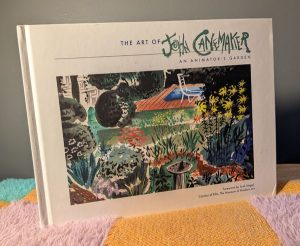 But in The Art of John Canemaker: An Animator’s Garden released in January of 2026 and published by Old Mill Press, John shares with us through his art, perhaps his most important creation; the garden that he hand grew with his husband, Joe Kennedy, and which served as the impetus to his 1998 short film, “Bridgehampton”.
The book opens with a preface from Curator of Film at The Museum of Modern Art, Josh Siegel, who describes how Canemaker’s polished personal presentation and beautifully drawn films often obscures the challenges and tribulations of creation. Films that are often filled with the most joy come from individuals who have suffered or seen their fair share. Siegel references Van Gogh’s studiousness in nature and attributes Canemaker’s artistic reach to the same meticulous habit and observable eye.

John Canemaker
The next four chapters are divided into the four seasons with Canemaker’s paintings and color choices guiding us through nature’s year-long cycle. Various plants, wildlife, portraits, self-portraits, and landscapes serve as the subject matter all deriving from the hand grown garden as it grows and they are fantastic to look at. The paintings are often in gouache and range in style, form and color and are subjectively very beautiful. Some of my favorites are of evening fireflies and specific points of view; a sideways glance at a forward-facing empty garden chair surrounded by hydrangeas is a powerful image both for what is shown and who is missing.
The final chapter serves as a bit of a nature memoir relating how the various landscapes and paintings throughout the book served as the inspiration for Canemaker’s 1998 short film, “Bridgehampton”. John walks us through how the various 15+ years of paintings were used as the inspiration for movement and color for the final film, he elaborates on the collaborative process with jazz musician Fred Hersch, and shares the entirety of the storyboard. The film itself can be seen in The Milestone Collection – John Canemaker: Marching to a Different Toon DVD.
The Art of John Canemaker: An Animator’s Garden is a fantastic compilation of nature paintings, a time capsule of “Bridgehampton”’s creation, and a beautiful love letter to a partner and a natural space.
Grab your pencils, next month we’re getting academic. Until then, please dive in and enjoy the complete Animation History Bibliography section of the Cartoon Research website. See you next month with another round up of animation book news and reviews!