
 Few African Americans received on-screen credit for their work on animated theatrical shorts. People who contributed their talents for many years received no billing, such as Lillian Randolph as the domestic maid’s voice in Tom and Jerry from 1940 to 1952 – or Roy Glenn, who voiced the Scarecrow in George Pal’s Puppetoons. Max Fleischer was generous in giving star billing to Louis Armstrong, Cab Calloway, and the Mills Brothers in the 1930s for episodes of Betty Boop and Screen Songs. George Pal did the same with Duke Ellington and the Luvenia Nash Singers for Puppetoons episodes. After Eddie “Rochester” Anderson’s credit in 1959 for the Warner Brothers Cartoon The Mouse That Jack Built, the independent studio run by John and Faith Hubley acknowledged work by Benny Carter, Dizzy Gillespie, and Quincy Jones in their shorts.
But in more commercial work, perhaps the last African American on-screen credit in a Golden Age cartoon short went to upright bassist Ray Brown. DePatie-Freleng’s music director Doug Goodwin included him among the credited musicians he assembled to play his cartoon scores. Brown’s name appears on the Roland and Rattfink debut Hawks and Doves (1968) and the debut of the series The Ant and the Aardvark, titled the same (1969). Typically, animated films listed only the studio’s music director in the credits. On the other hand, Goodwin’s musicians were all major talents on their own before their work for DePatie-Freleng. Brown had already co-founded the Modern Jazz Quartet two decades earlier.

Brown’s credit in the initial “Ant And The Aardvark” cartoon (1969)
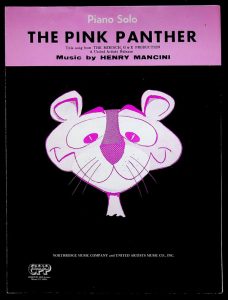
Pink Panther’s theme, composed by Henry Mancini, is from the live-action feature of the same name. African American tenor saxophonist Plas Johnson gave the theme its memorable solo in the original 1963 recording. The solo and DePatie-Freleng’s animated opening sequence for the movie received more favorable reviews than the movie itself. A short version of the theme (and the saxophone solo) accompanies the opening credits of every Pink Panther short from the studio. Therefore, Extinct Pink has musical influences from two African Americans.
Although only Goodwin receives credit for music in Extinct Pink, Brown’s musicianship contributes to much of the film’s pacing and humor. In the first three minutes of the film, the studio loops Brown’s riff at least three times. Brown’s quick bass-plucking appropriately accompanies the running of Pink Panther, the Little Man, and the dinosaurs in the first half of the film. Chase scenes rarely took place in Pink Panther cartoons, and the fast pace of the action in Extinct Pink required a faster score than the mellow ones that Greene and Lava had provided in previous episodes. Just as the constant running sets the foundation for the characters’ actions in “Extinct Pink,” Brown’s bassline establishes the score’s rapidity.
Unlike the aforementioned shorts crediting other African Americans, the films showing Brown’s name do not have content specifically referencing African Americans. DePatie-Freleng’s shorts do not feature African American characters. By using Brown’s work in cartoons, DePatie-Freleng made the progressive decision to let an African American contribute to a cartoon regardless of the ethnicities of the characters.