
 Quite a surprise I’m writing about a release not from Warner Archive!
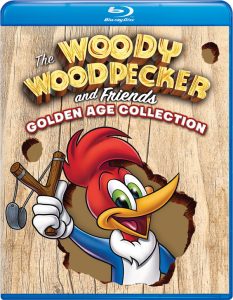
Universal’s Woody Woodpecker and Friends Golden Age Collection is the latest classic cartoon Blu-ray release and quite an unexpected one.
A bit of preamble on how this came to be (and there’s an informative episode of The Extras with Fearless Leader Jerry Beck explaining further): a sizable percentage of the color Walter Lantz cartunes (over 130 shorts) were newly restored in high-definition for Universal’s deal to air the entire color cartoon library on MeTV and MeTV Toons in 2023. More may have been done recently, I don’t know. But around the time they started airing, Jerry had an idea to pitch his contacts at Universal a sequel to the Woody Woodpecker Screwball Collection from a few years ago that would encompass a selection of the newly restored Lantz shorts with all of the characters.
As has been the case over the years when the very rare opportunity to program a Lantz compilation arises (like with the old mail-order Columbia House set that used censored/credit-less TV prints, or the mass-market DVD sets with uncensored but wanting transfers), Jerry picked my brain on which titles should be included. Having co-maintained the Walter Lantz Cartune Encyclopedia (now permanently archived for posterity) for many years, I’m known to have a higher tolerance for all eras of Lantz than the average cartoon historian.
So he sent the pitch over to his contacts and waited… It was quite a shock for both of us that out of the blu, some two years later, Universal let Jerry know they were putting out a single disc with our selection verbatim and a few extras.
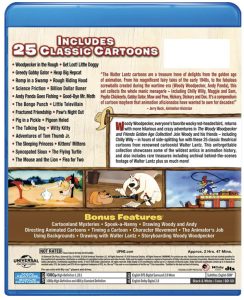
The back cover (click to enlarge)
Those gems aren’t present here, as most of these wouldn’t have been our first choices… none of Avery’s cartoons (despite the back cover using a picture from Legend of Rock-a-Bye Point), nothing from Shamus Culhane (again, despite the back using a picture from Fair Weather Fiends), no Dick Lundy… But out of the 130+ that were recently restored, this is the best of what was available, and it’s obvious that if anything before 1960 got restored in that recent initiative, it was by accident.
And the restorations… what a pleasant surprise! I was no fan of the transfers on the Woody Blu-ray from a few years ago which had a multitude of issues, from obviously wrong soundtracks, to DNR, to being graded to resemble 1930s Iwerks Cinecolor. The restorations seen on Golden Age Collection, however, look and sound quite wonderful, and do appear to have been done on a budget (a few like the astonishingly included Andy Panda Goes Fishing look a little rough in spots). Considering the brouhaha over digitally made errors and how common they are getting, I’m just fine with these being a little “raw” if it means a more accurate presentation. This disc is not without errors: they do use a B&W Universal globe on the 1930s and 1940s cartoons when it should be blue, and The Flying Turtle uses the soundtrack from The Woody Woodpecker Show version, so an unrelated bumper with Woody speaking plays over the original theatrical credits. These are still leagues better than the various versions that have turned up on home video in the past, so it thrills me that years of serious issues with the Lantz library have started to be mostly rectified.
 While this disc isn’t the very best of what Walter Lantz had to offer, it kind of is the best of the rest and gives a general idea of what the studio normally accomplished on its good days: affable time-wasters that can sometimes be surprisingly funny. Mark Kausler echoed my own thoughts a while back that the later stuff is essentially Hanna-Barbera TV cartoons with more drawings and less design (and frankly if you have your eyes shut watching MeTV Toons, it can be hard to tell if Woody or House of Hanna-Barbera is on).
Like Paul Terry, Lantz stuck to his roots as a silent cartoonist and forever wanted strictly gag pictures—and he wanted them cheap. Those conditions made the studio quite a revolving door of talent, with many names familiar to cartoon researchers: Mel Blanc, Mike Maltese, Art Davis, Burt Gillett, Alex Lovy, Don Patterson, and Sid Marcus all did good/interesting work at one time or another at Lantz’s, and are all present on this disc.
 The majority of the Lantz cartoons after 1952 were directed by Paul J. Smith, who started as a serviceable director in the ‘50s, but after that, he only made some of the ugliest, unfunniest cartoons of the theatrical era. It’s that majority, and Lantz’s acquiescence of the obviously poor quality, that cemented the studio’s lousy reputation. Majority rule says any random assortment is of course going to include late Smith, but I will say that the MeTV/MeTV Toons hour-long blocks are about as good of Lantz line-ups as they can be (the only thing that’d make them better is including at least one black-and-white Oswald short per show).
Yet, as Jerry said on The Extras, when the credits on a later Lantz cartoon don’t read “Directed by Paul J. Smith”, you might actually be in for an inoffensive and maybe funny cartoon. Even if they do read that, it still may be the case (as things like the included Romp in a Swamp and especially Pig in a Pickle prove).
And, generally speaking (and very much reflected in the selection), the studio did do its best work when it wasn’t with their most popular character (the ones by Culhane and Patterson excepted). If nothing else, lesser Lantz at least makes you appreciate when the stars actually aligned in the Golden Age studios even more so.
As per usual, here are my “liner notes” for the cartoons featured.
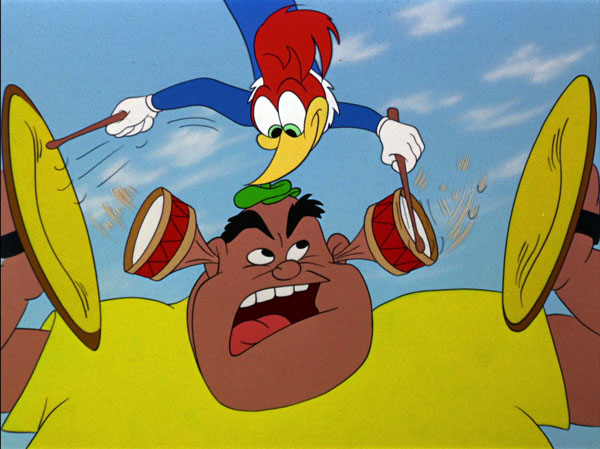
WOODPECKER IN THE ROUGH (1952, Walter Lantz/Don Patterson)
Woody goes up against Bull Dozer (from Culhane’s The Loose Nut) in a crooked game of golf. This comes at the end of an awkward two-season clump of “silent” Woody cartoons with practically no dialogue (the idea was to make the films easier to sell internationally) and is the first short where Gracie Lantz voiced Woody beyond the laugh (the section in George Pal’s Destination Moon with Woody was the very first). Studio documentation and filmographies “officially” credit direction on this and most of the 1951-52 Woodys to Lantz himself, but Devon Baxter uncovered paperwork that more or less confirms Don Patterson de-facto directed these cartoons (before he started getting the credit he should have all along with The Great Who-Dood-It). It does seem obvious that Lantz was giving himself credit of the “Dave Fleischer” sort each time his studio reopened after financial hardship. (Alex Lovy confirmed to Milt Gray that he actually directed Woody’s debut Knock, Knock and others, and didn’t recall Lantz ever directing in the early 1940s.)
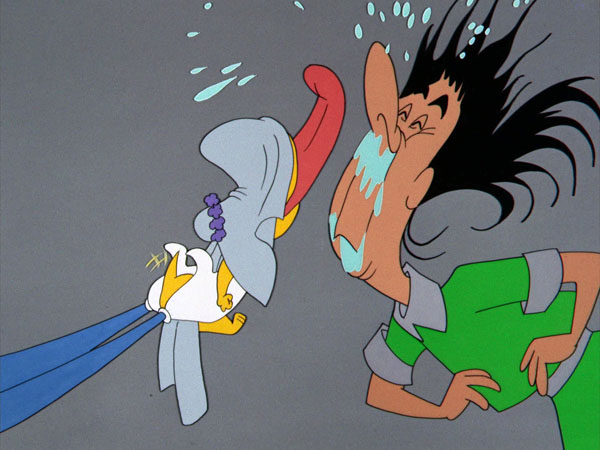
GET LOST! LITTLE DOGGY (1964, Sid Marcus)
Woody tries to get Alfie/Duffy Dog past boarding house crone Miss Meany. Walter Lantz himself voices the mean guy who gets his ass bitten by the dog.
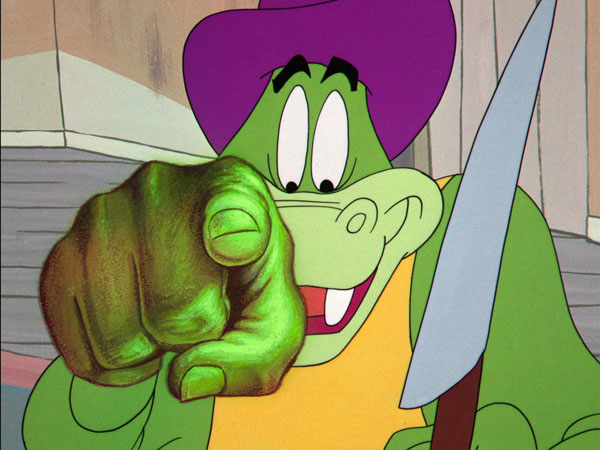
GREEDY GABBY GATOR (1963, Marcus)
No good cartoon character was ever named Gabby, and Jack Hannah more or less made the same cartoon over and over again with Gabby Gator disguising his swamp dump as something else to trap Woody. What was endearing about director Marcus and animator Art Davis (who were friends going back to silent era New York) getting together again in the limited animation of the ’60s is that they would do all kinds of weird, awkward throwbacks to approaches and humor that had died out some thirty years previously. This cartoon is one of the best examples, particularly the needlessly over-rendered painting of Gabby Gator’s hand.
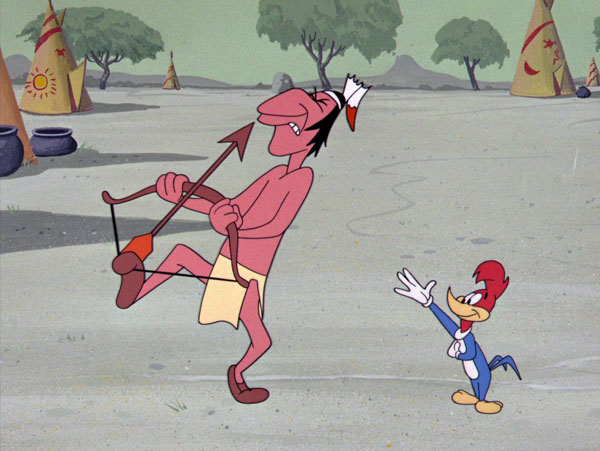
HEAP BIG HEPCAT (1960, Paul J. Smith)
Native American Mooseface needs to prove he’s not a Hollywood phony to marry the chief’s daughter, so he hunts game… yes, Woody. The fake-out opening with Mooseface getting shot was inexplicably used as a bumper on the Woody TV show… without revealing it was a fake-out.
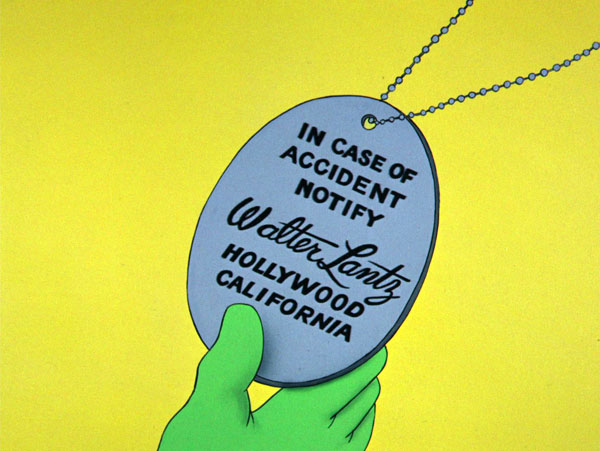
ROMP IN A SWAMP (1959, Smith)
Before Hannah named him Gabby and made his head more Donald-like, he was All. I. Gator hunting Woody. Frantically stupid cartoon with surprisingly good gags, like Woody’s tag indicating his ownership. “I’m gonna have a dinner and the menu’s gonna be—pressure-cooked gator and sassafras tea!”
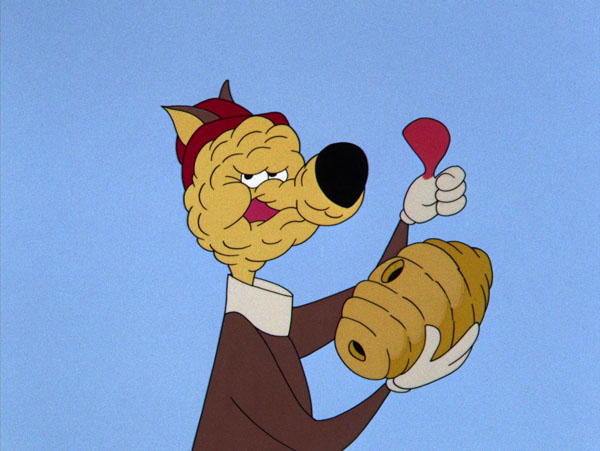
ROUGH RIDING HOOD (1966, Marcus)
Second (and funniest) of Woody’s fairytale encounters with the Crazy Guggenheim wolf (Daws Butler proving he can do the voice just as well as Stan Freberg more famously did as Pete Puma). “That was a stupid thing to do!”
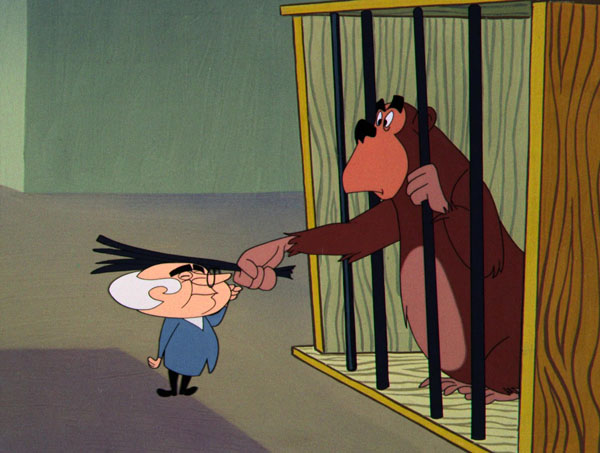
SCIENCE FRICTION (1963, Marcus)
Comic Benny Rubin voices a professor who wants to swap Woody and an ape’s brains.
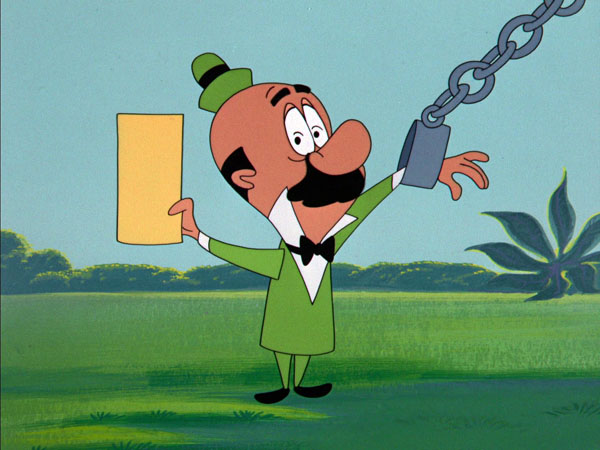
BILLION DOLLAR BONER (1960, Alex Lovy)
Mediocre rehash of the old Wabbit Who Came to Supper routine with the added bonus of abusive benefactor Inspector Willoughby (“Rubber Check Charlie” here) being a counterfeiter. More notorious for its title promising something more obscene than it delivers.
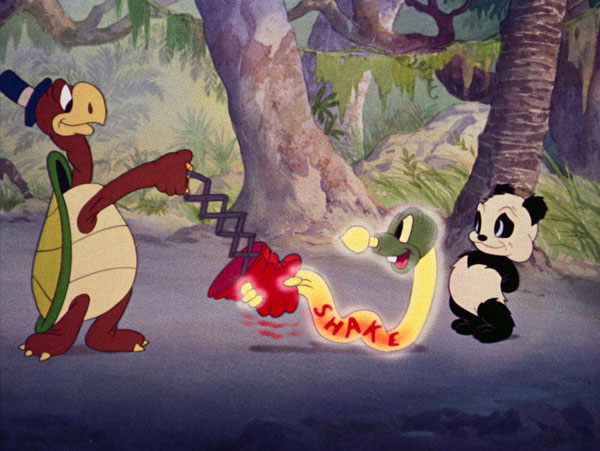
ANDY PANDA GOES FISHING (1940, Burt Gillett)
Legendary psychopath Burt Gillett’s final gig in animation and last attempt at bankrupting a studio were at Lantz, where he made cartoons that were sure pretty sloppy despite looking expensive and elaborate. Andy Panda’s second cartoon, in which he’s still evading the pygmy panda hunters, aided by Mr. Whippletree and an electric eel. Studio documentation just calls Whippletree “Rochester turtle”.
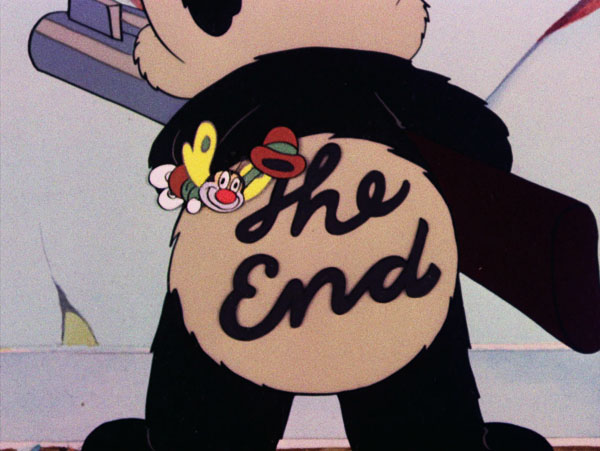
GOOD-BYE, MR. MOTH (1942, Lovy)
Andy lives on his own now, and, without his much funnier father or the turtle, continues to be classic cartoons’ greatest non-entity. Think about it… Mickey, Betty, and Porky all took years to be sidelined by their co-stars… Andy was a nothing from the start! The cartoons always depended on the other characters’ personality or the strength of the gags. This lifeless escapade with a moth in Andy’s tailor shop has neither.
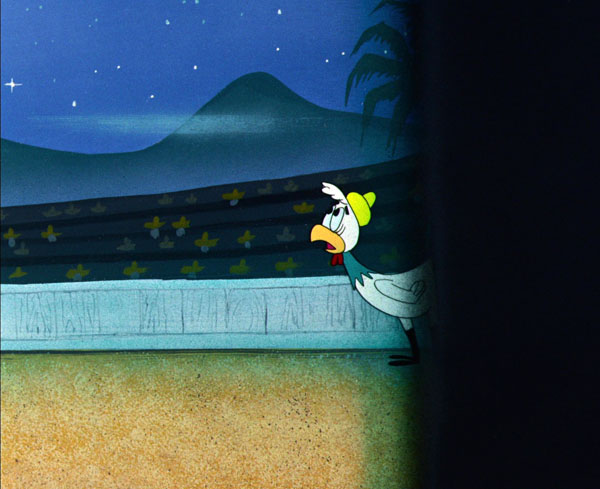
THE BONGO PUNCH (1957, Lovy)
Lively, well-designed one-shot about Pepito Chickeeto, who would rather play the drums than fight like his papa. Lantz seemed to have big plans for this character, as he’s all over merchandise for several years despite never appearing in another cartoon.
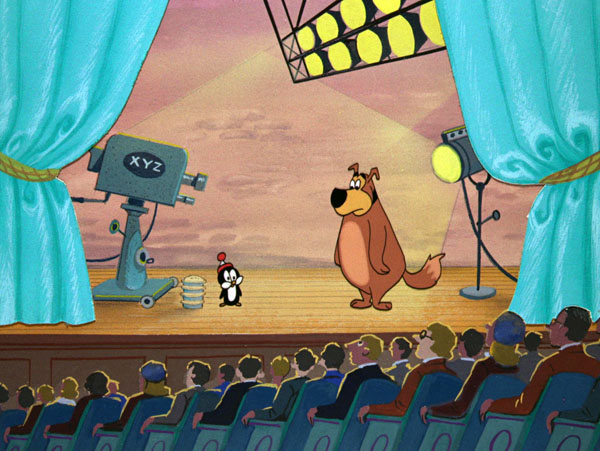
LITTLE TELEVILLAIN (1958, Lovy)
Smedly needs to keep Chilly from auditioning and disturbing his executive boss at a TV studio. Bookended with the cynicism that Smedly’s abuse proves to be a smash hit on television. Lovy’s cartoons generally have little to recommend them beyond that he was more talented than Smith, but Lovy did do a solid job continuing Chilly Willy and Smedly after Avery left (talk about a tough act to follow) and they’re leagues better than anything anyone was doing at the same time with the woodpecker.
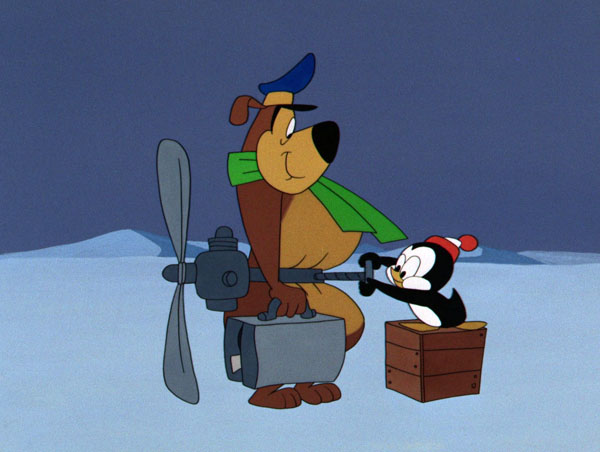
FRACTURED FRIENDSHIP (1965, Marcus)
Smedly vows to leave for a warmer climate, so Chilly tries to kill his best pal to prevent this.
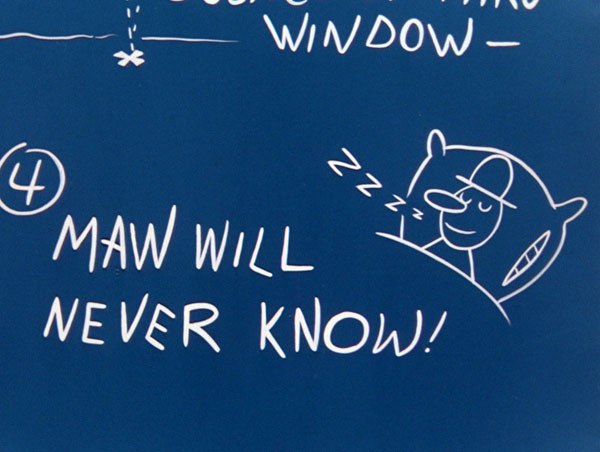
PAW’S NIGHT OUT (1955, Smith)
This was the last in Lantz’s attempt to make an animated series akin to Universal’s Ma and Pa Kettle movie series. A shame as they’re all pretty funny hillbilly comedies, especially the concept of everyone recognizing the pig Milford as “the smart one”. This time Milford has to help Paw get back in the house without waking Maw. Written by Mike Maltese, who worked at Lantz while Warners was shut down in 1953. His Lantz work is mostly funny (though he unhappily collaborated with his friend Tex Avery), but it also proved Maltese needed Chuck Jones as much as Jones needed Maltese.
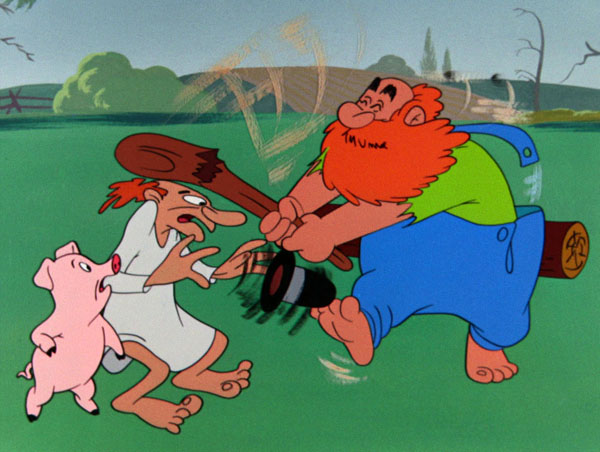
PIG IN A PICKLE (1954, Smith)
Maw and Paw rescue birthday boy Milford from a pig roast with the terrible 39 Boomer Brothers, who may or may not be practicing incest. Another Maltese story. Not for nothing, this Paul J. Smith cartoon is objectively the best and funniest cartoon on this disc (how ironic).
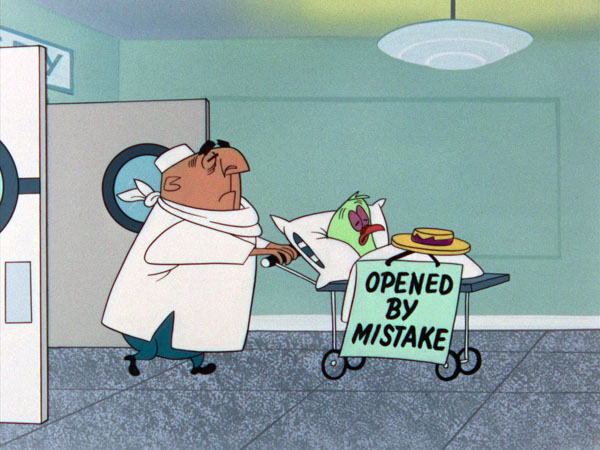
PIGEON HOLED (1956, Lovy)
Homer Pigeon, who starred in two ’40s Lovy-directed cartoons and remained a mainstay of the New Funnies comics, gets an overhaul in design in this one, in which he seeks new glasses but ends up enlisting. Another cartoon that may have had some unspoken Avery origins (its production number is before Room and Wrath, one Avery started), as a few gags come dangerously close to his posing and timing, specifically when Homer gets “opened by mistake” in surgery.
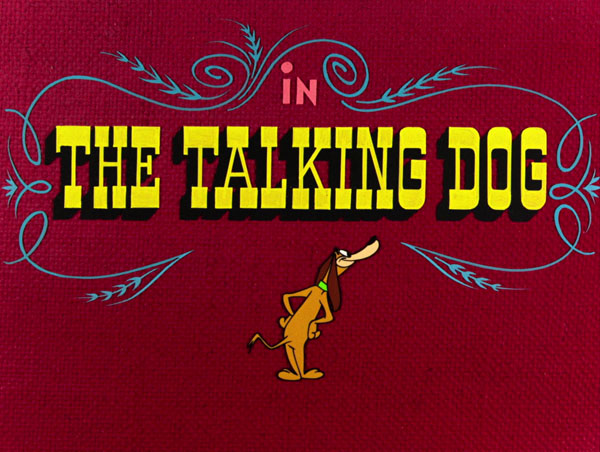
THE TALKING DOG (1956, Lovy)
Continues Avery’s Sam and Maggie characters without any heart. Seeks to answer, “What if we made Crazy Mixed-Up Pup again, but made it misogynistic and not funny?” Noteworthy for the backgrounds by Bob Givens and Filmation founder Lou Scheimer.
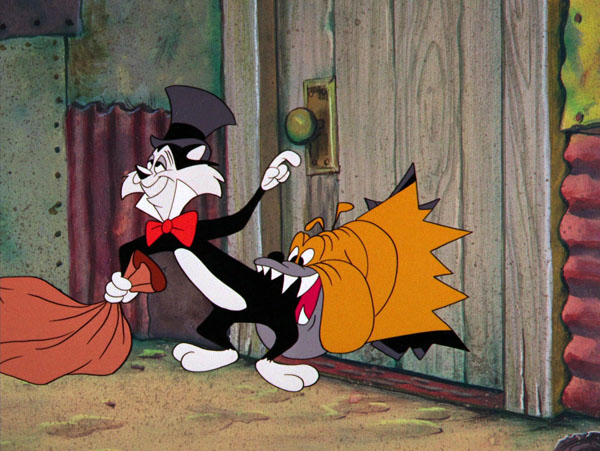
WITTY KITTY (1960, Lovy)
Doc the Cat (voiced by Paul Frees) was a dapper charlatan who starred in an amusing set of cartoons in the early ’60s. This one forgets to include the Hickory and Dickory mice for most of the cartoon (they couldn’t even bother to keep the voices correct for their two lines) and instead focuses on Doc’s battle to steal a turkey from Cecil the bulldog’s fridge for two other crooked alley cats. Like many cartoons that strive for no more than frantic and stupid mediocrity, this one I’ve loved since childhood with my cold, dead heart for reasons I can’t explain. “Pass the creme puffs, Cecil! And don’t forget the pink tea, Cecil!” Stuff like this made it inevitable Lovy’s old pal from Terrytoons Joe Barbera, would lure him away to work on his limited animation, which also included a pretentious cat and pair of meeces.
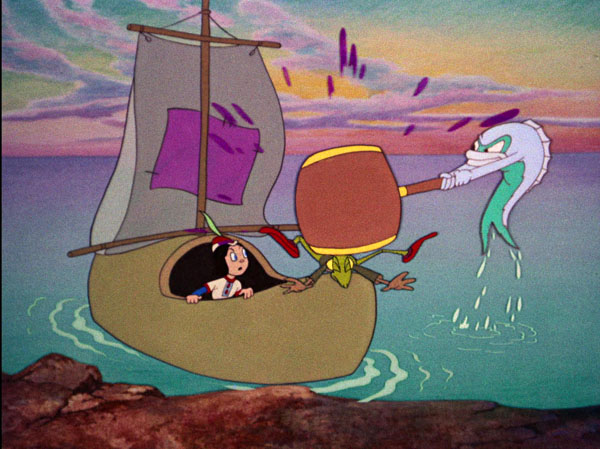
ADVENTURES OF TOM THUMB JR. (1940, Gillett)
Ambitious but aimless does describe Gillett’s filmography, and he really did need the Disney organization and animators to turn out an actual classic. Tom Thumb Jr. and his dopey grasshopper companion run afoul an old lady and the pests in her house. You can slag on early Chuck Jones all you want, but he was better at chasing Disney than this, for a lot less money (and he did it with his own Tom Thumb cartoon released the same year).
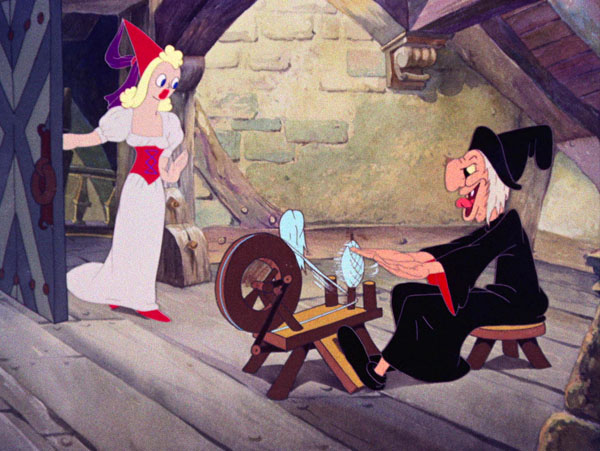
THE SLEEPING PRINCESS (1939, Gillett)
This Nertsery Rhyme cartoon beats Disney to the Sleeping Beauty story by two decades and at least has some fun with how silly the whole thing is. Noteworthy for some horrific-looking rotoscoping of the prince (voiced by Mel Blanc) at the end.
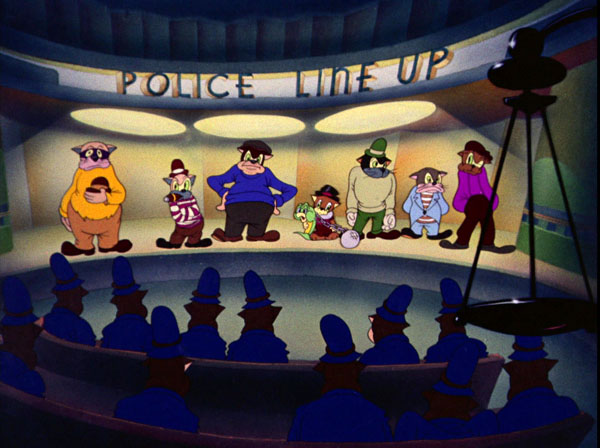
KITTENS’ MITTENS (1940, Lovy)
Three little kittens lose their mittens, so they lie and say they were robbed by the local orphan, their favorite punching bag. Cloying and vicious, but it still looks comparable to any of the Gillett cartoons and was obviously made for a lot less drama. Lantz probably took notice, too.
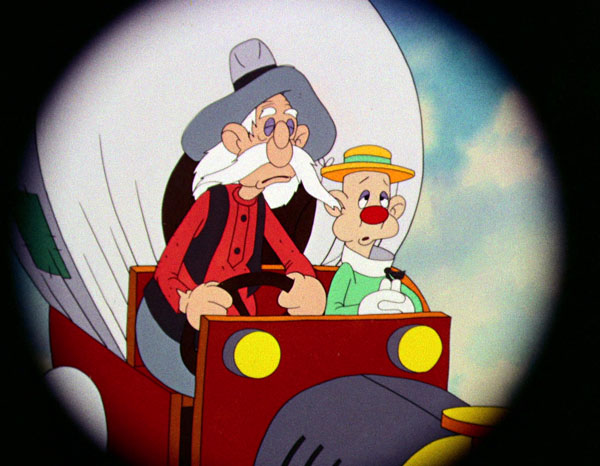
SYNCOPATED SIOUX (1940, Lantz/Lovy)
Ben Hardaway was the main writer for the ‘40s Lantz cartoons, and his style, prevalent in this cartoon, could be described as “raiding Tex Avery’s waste basket”. It’s spot gags related to Punchy (Lantz’s direct rip-off of Avery’s Egghead/Elmer) encountering a Native tribe out west. One of the first scores Darrell Calker did for Lantz, and his work immediately gave these things a life of their own that sure made them a lot more palatable than the competition’s obvious attempts to ape Avery/Warners.
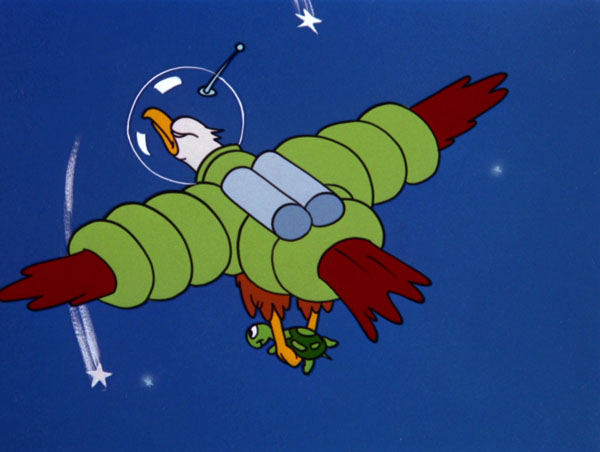
THE FLYING TURTLE (1953, Smith)
Screechy Dal McKennon voices most of the characters in this cartoon about Herman the turtle, who pays an eagle to take him to stratospheric heights so he can fly. Spoiler: Herman dies.
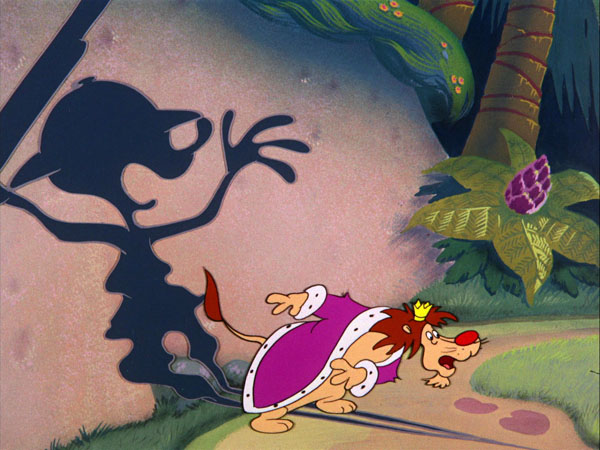
THE MOUSE AND THE LION (1953, Smith)
A big game hunting mouse sets out to capture the king of the beasts. Smith’s second cartoon as director, proving he set out to be unfailingly unfunny rather early.
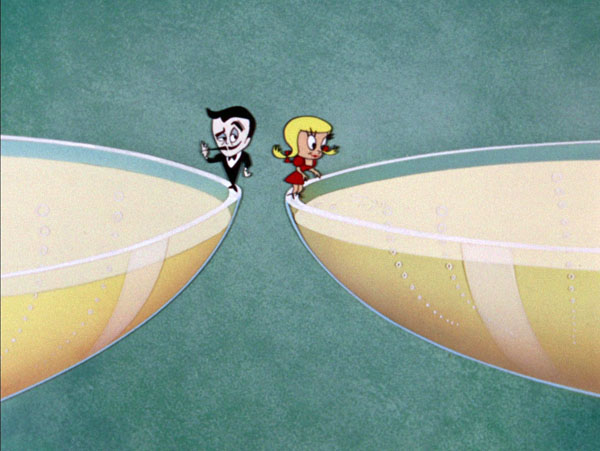
FLEA FOR TWO (1955, Don Patterson)
This remake of The Hick Chick but with fleas obviously started as an Avery project (its production number is ahead of Sh-h-h-h-h-h) but was completed by Don Patterson (who also animated on it).
The bonus features do include what may be the disc’s best feature: the behind-the-scenes live-action short Cartoonland Mysteries, which if not native high-definition is at least a really good up-scale. Any film of classic cartoon studio operations is rare and precious, so it’s nice to see this one in such high quality.
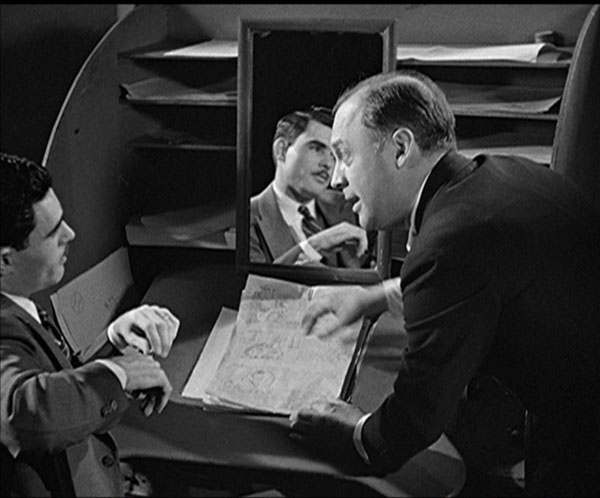
“Cartoonland Mysteries” (1936), with Manuel Moreno (left) and Walter Lantz (at right).
Non-Warner-owned classic animation on Blu-ray is also rare, and while the Woody Woodpecker and Friends Golden Age Collection doesn’t exactly offer Rolls-Royce cartoons, Universal is to be commended for putting out anything that appeals directly to the die-hard collector, and in high quality to boot. Hold out hope that good sales will send the message to release the real Golden Age of Woody and friends.