


Every year (or so) The Hyperion Historical Alliance (HHA) releases an Annual publication featuring articles about the Walt Disney Company that may not warrant a full book release. Last month, their fifth Annual was released.
The HHA is a non-profit organization whose mission is to preserve, educate, and inform about the true histories of the Walt Disney Company and to pick up what other historical excursions may have missed. You may be familiar with their hardcover Monograph Series which just released their fourth volume this month, Mickey Mouse in the 1930s – The Christmas Season by Didier Ghez.
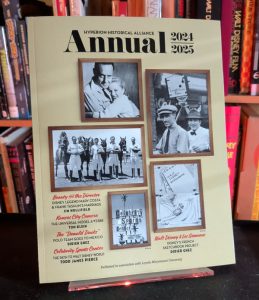 I love these annuals! They are always full of articles and perspectives you may not have considered before and give us even more insight into some of the prominent individuals in the history of the Walt Disney Company and how they grew over time. So today let’s check out The Hyperion Historical Alliance 2024/2025!
The first article, “Kansas City Camera” by Professor Tom Klein, explores the history of the Universal Model A Camera #2388. This camera was heavily used during WWI and an object that Walt Disney came across early in his life while doing volunteer work for the American Red Cross and, eventually, his own ownership of the device. Prof. Klein goes into detail about the camera’s history, its popularity and use, but also its operation exploring how the cranking mechanism and operating procedure would allow early animators the means to record frame by frame. Even the camera’s instructions and descriptions of the device makes clear how not only films, but “dream and trick” films would have been possible.
While still working within the Red Cross Walt Disney and Fred Harman’s would go into business with the Model A as the foundation. Prof. Klein explores how it was through this business relationship that would be an impetus for the creation of Laugh-O-Grams.
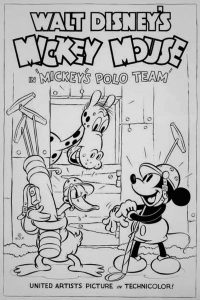 In “The ‘Donald Ducks’” Didier Ghez explores how Walt Disney’s passion for polo resulted in a challenge from the Mexican National Polo team and how artists Harry Tytle, Larry Lansburgh, Dean Morrison, and Mel Shaw went about preparing, traveling, and competing against said team. Throw in the atrocities of travel, the pressure of international representation, and some Nazis, and you have a legendary story.
This entire trip is worth reading as it would have profound effects on the artists that travelled and competed, but what I find interesting is just how many organized passions early Disney artists had while also working full time. The early Disney crew had bowling teams, musical bands, passionate polo players – and they were all successful on their own terms while still creating the shorts and films we are familiar with. Their story gives us no excuses today to do the things we want to do and make the things we want to see.
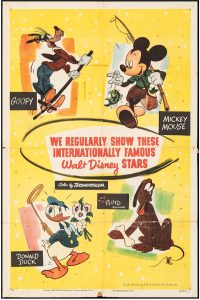 In “Walt Disney & Les Gémeaux” Didier Ghez explores how Disney capitalized on the French market during and after WWII, especially when film distribution had stopped leaving a glut of over 100 short films unreleased for the market. The courageous tenacity of the Disney French representative Wally Feignoux, whose wit artfully dodged Nazis looking to destroy anything American, would be the liaison between Disney and the animation studio Les Gémeaux. After the war, there was a strict economic pause in France that prevented Francs from leaving the country. To both utilize the capital geographically isolated as well as release the backlog of films to eager audiences, Disney worked with Les Gémeaux to combine with intermissions, similarly themed shorts together in a “Sketchbook” package.
It was through this partnership that co-production conversations began in earnest, though, they seemed to have amounted more for skill and technical information exchanges than any production work. Regardless, this is a fascinating peek into how Disney distributed around the world and the challenges that brought.
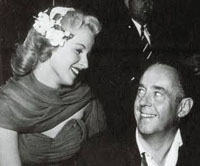 In “Beauty and the Director” Jim Hollifield explores the relationship, marriage, and divorce of power-couple Mary Costa and Frank Tashlin. This bittersweet, made for Hollywood story, explores how the singer and director met, supported one another, found their own means of success, and, eventually, grew apart.
More than simply a love story, Hollifield frames their relationship as a deeply in love couple who strained to push each other into their most meaningful life, for Costa that was building towards an Opera career and for Tashlin a means of Directing. As Hollifield explores, they accomplished what they set out to do, but not without both positives and negatives and, unfortunately, at the cost of their marriage. The projects they worked together and the legacies they leave behind, Hollifield rightfully points out, would not have happened if they had never been together and fell in love. This article is a bit of a heartpull.
 I had no clue Disney owned an entertainment center in Colorado. An indoor pool, a bowling alley, and a high end restaurant? That sounds awesome!
Author Todd James Pierce gives us all the details on the history of the sports complex in “Celebrity Sports Center and the Path to Walt Disney World”. Pierce not only does a great job explaining how the heck Walt ended up being a partial owner and eventual owner of the sports complex, but details why it made sense for the Disney Company, who had just finished building Disneyland, to invest into yet another family activity destination. Without giving too much away, the challenges and lessons learned in Colorado, plus the difficulties in getting Disneyland off the ground, would prove invaluable when launching a new theme park in the swamplands of Florida – logistics, business financing, cultural changes, pop culture interests – all of these often opposing forces come together when attempting to design an attraction and would show Walt potential pitfalls to avoid.
Card Catalog Book Pulse News Update
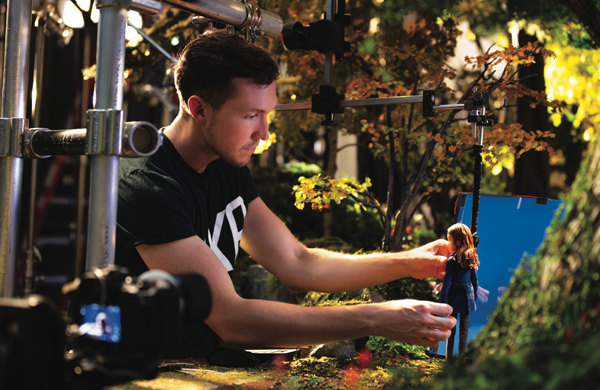
If you saw last month’s book preview, you would have seen Ozzy Inguanzo’s LAIKA: The Magic Behind the Stop-Motion Dream Factory which is scheduled for a March 10 release (and still is!). Since that preview article, publisher Rizzoli Universe has released additional details of the first volume release in the multi-volume partnership. In addition to a huge collection of photos showing off LAIKA’s production processes, including pre-visualization work, armatures, maquettes, and tools, there are also interviews with prominent LAIKAN crew members including Head of Model Shop Keith McQueen, Head of Scenic Michelle DeMello, Senior Hair and Fur Fabricator Jessica Lynn, and so many more. The book even features pre-release information for LAIKA’s next film, Wildwood!
That’s it for this month! Until next time, please dive in and enjoy the complete Animation History Bibliography section of the Cartoon Research website. See you next month with another round up of animation book news and reviews!