
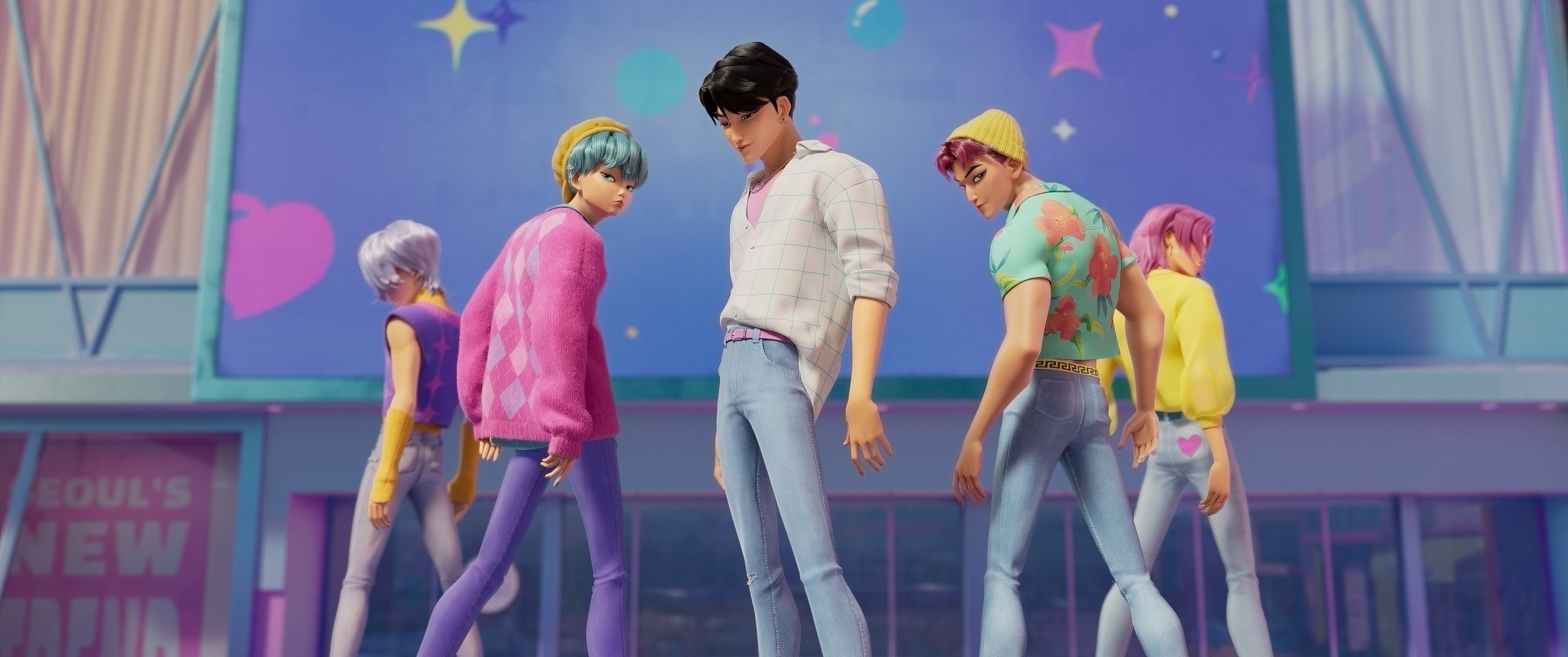
Putting the pulse of contemporary Kpop culture into animation, 2025’s KPop Demon Hunters blends glamour, choreography and demon-slaying action into one of the biggest movie events of last year. Rooted in Korean references, the film is a smash hit of colour, rhythm and spectacle. At its heart are the Huntrix, Kpop idols by day who moonlight as a group of demon hunters. It’s a visually bold concept that feels tailor-made for animation.
Keen to explore how this sensational story was crafted, Toon Boom spoke with FX Supervisor Filippo Maccari and Senior 2D FX Artist and Animator Nikolaos Finizio, who together led and shaped the film's ambitious effects pipeline. Maccari oversaw both 2D and 3D FX teams, guiding everything from weapon effects to explosive demon transformations. Finizio contributed to early FX concept development before moving into shot production, animating hand-drawn 2D effects and building library assets that would later be enhanced in 3D.
What makes KPop Demon Hunters stand out is the way its effects animation carries the tone from glossy, rhythmic spectacle to something darker and more volatile as the story unfolds. The contrast between the Huntrix’s luminous, music-video energy and the demons’ jagged, organic force is carefully designed and hypercharged through FX.
In the conversation below, Maccari and Finizio break down how that energy flows across a feature-scale production. They discuss how ToonBoom Harmony helped them dial up the glitz, glamour and supernatural sparkle, ensuring that every explosive effect landed with impact. Check out the trailer for KPop Demon Hunters, and read our full interview below…
Could you start by telling us a little about your role on KPop Demon Hunters and the feature film, for readers who are unfamiliar…
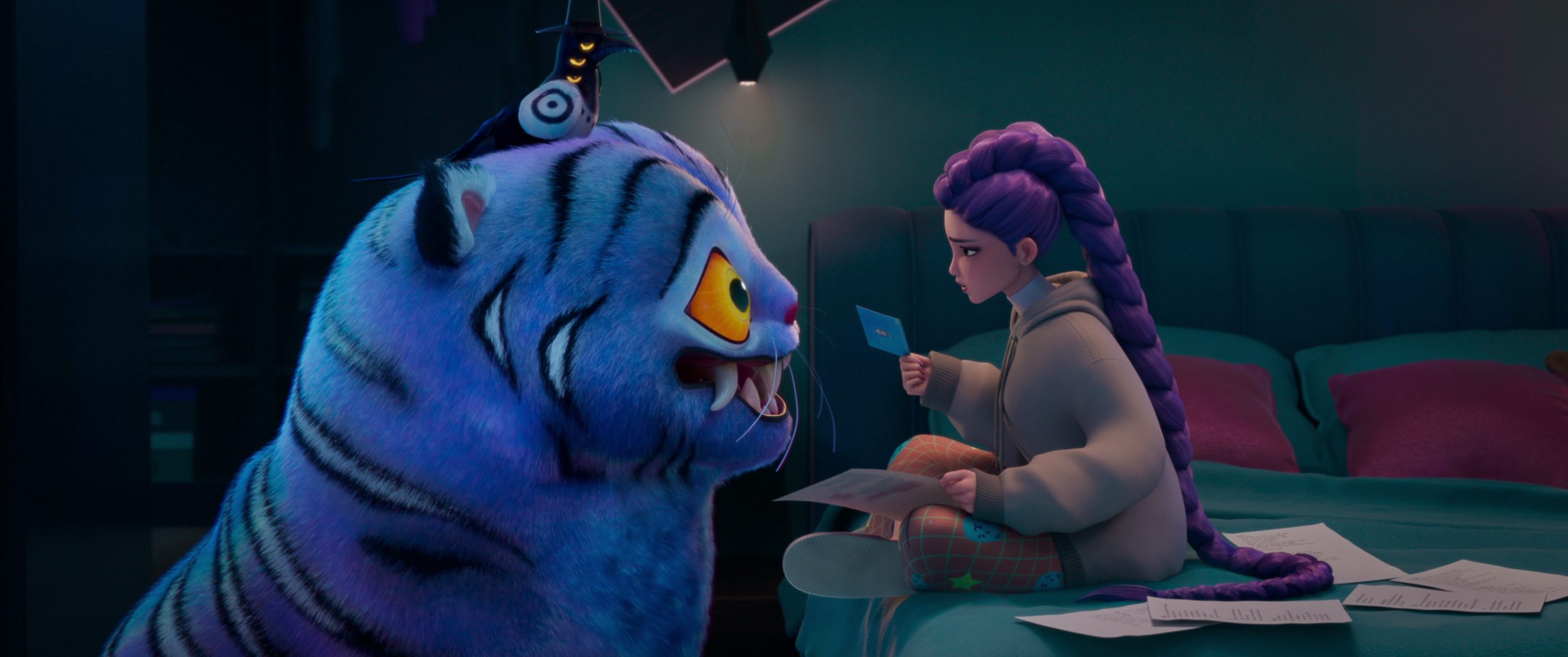
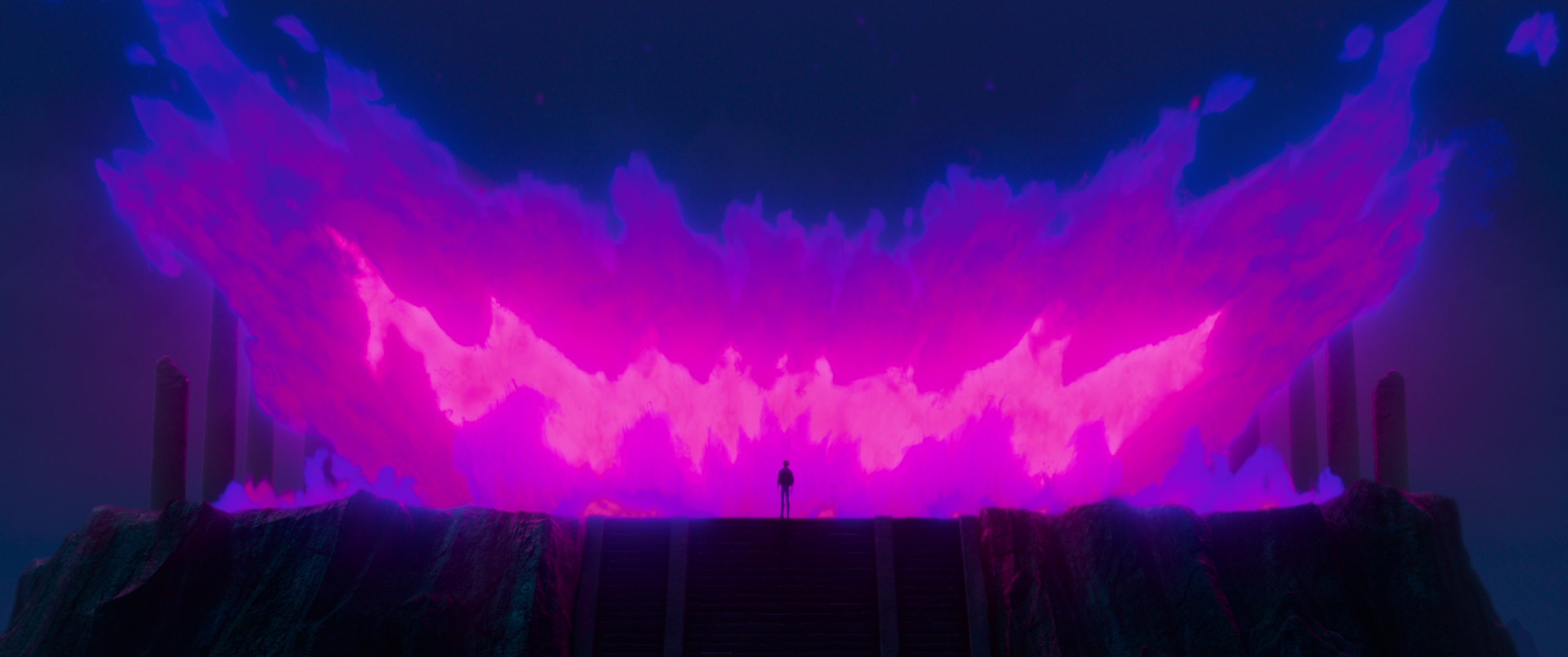
Filippo Maccari: I was the FX Supervisor on KPop Demon Hunters. The movie mixes KPop culture with supernatural action, so it’s full of color, energy, and fantasy. My job was to lead both the 3D and 2D FX teams, planning the effects, keeping the style consistent, and making sure everything supported the story and the mood of the movie. That included all kinds of effects: weapon FX, the Honmoon energy lines, exploding demons, and lastly but not by importance Gwima, a gigantic character made of (stylized) fire who grows bigger and more powerful as the story goes on.
Nikolaos Finizio: I was a senior 2D FX artist/animator on Kpop Demon Hunters, My role comprised various duties: early on I helped with FX concept development and contributed 2D designs and animation tests to help define the visual identity and workflows of the FX in the movie; once we entered the production phase, I animated shot-specific 2D FX and created library assets for the 3D FX artists to composite on various scenes. By then we also expanded the 2D FX department with two more animators: Brandon Louie and Aleksandar Hristov.
The film blends KPop culture with supernatural action. How did that influence the design and style of the FX animation?
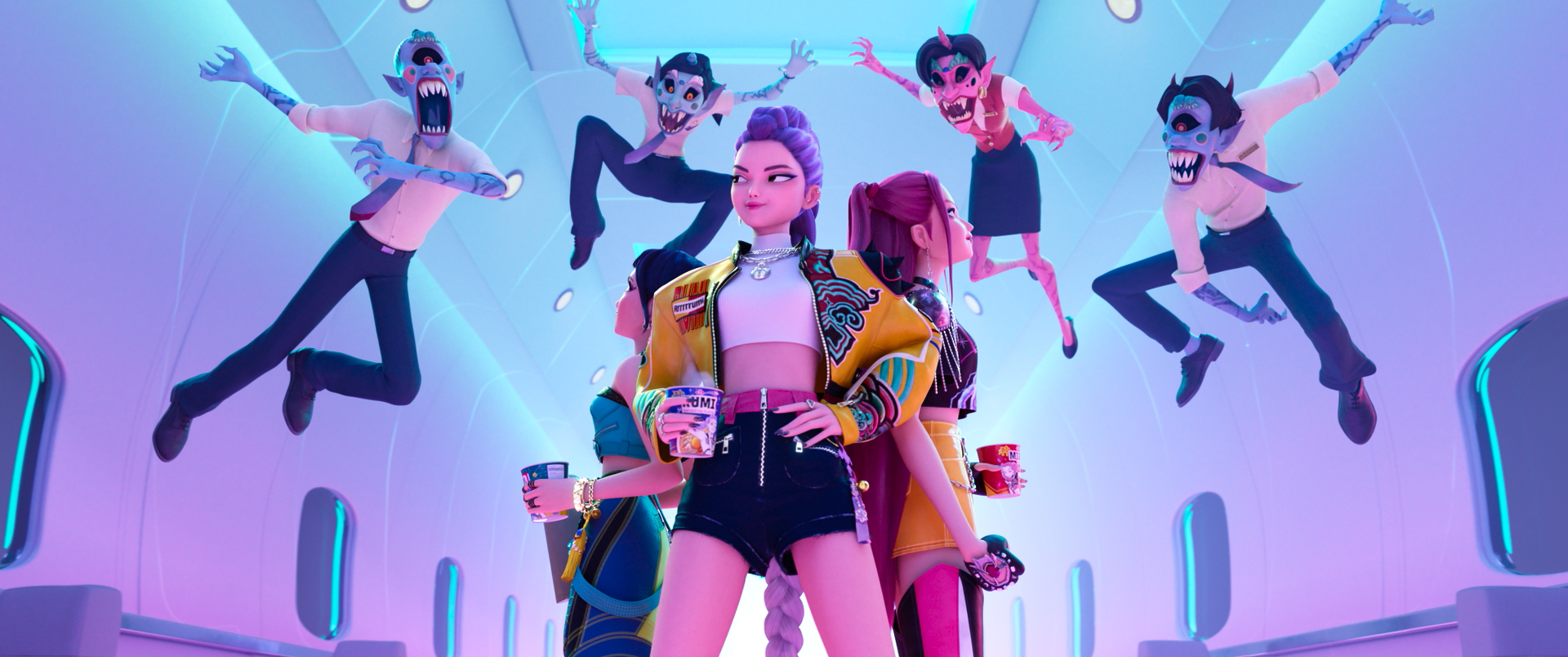
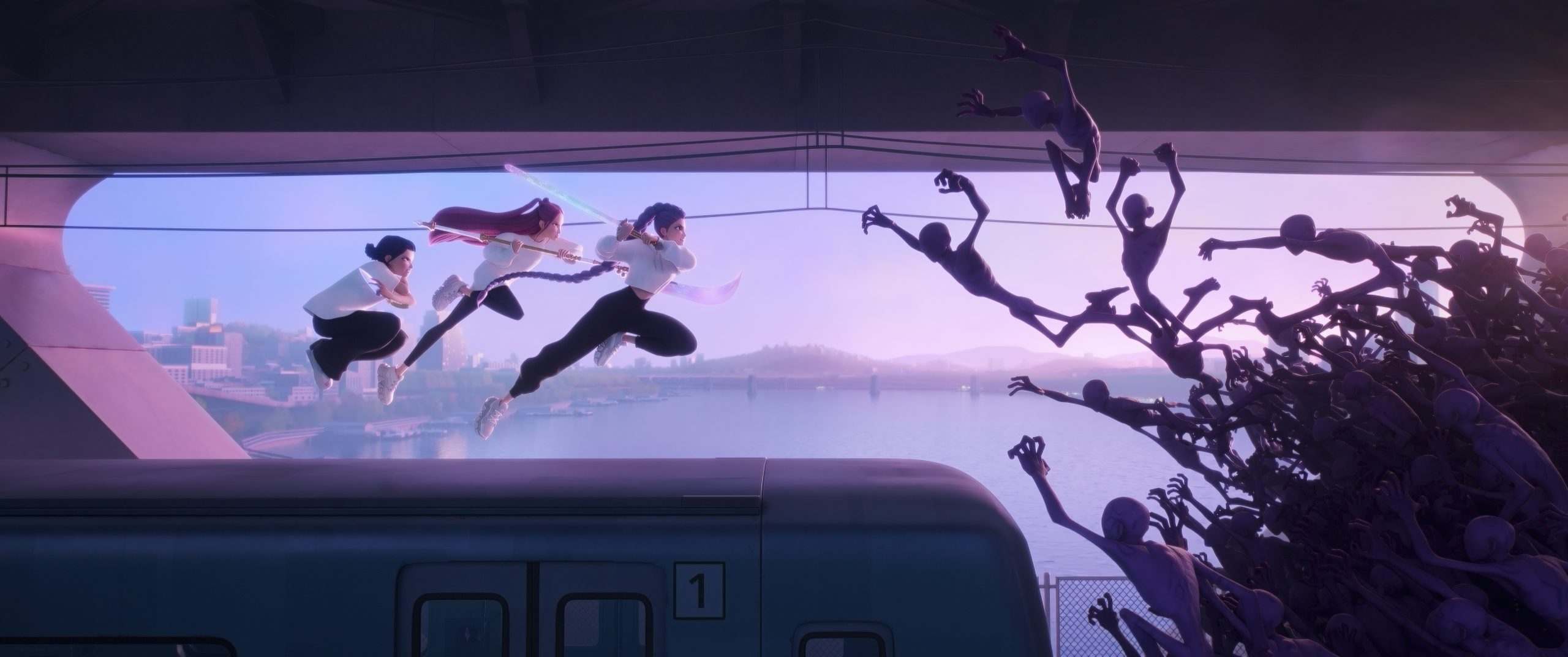
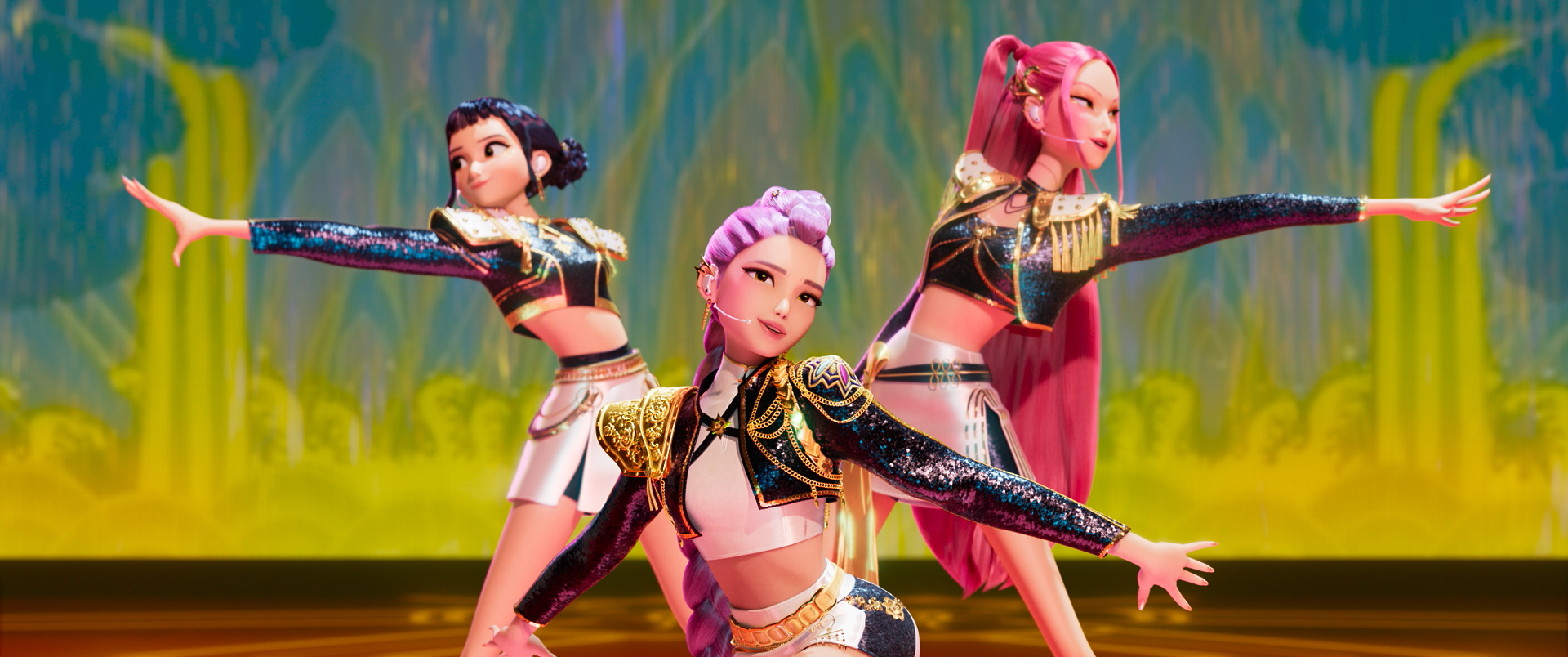
FM: That mix really shaped how we designed everything. The FX of the Huntrix are shiny, bright, and very rhythmic, like a music video. The Demons are instead darker and more organic.
The hard part was making both feel like they belong in the same world. So we used rich colors, clear timing and clean shapes, but during the intense fight scenes we let the motion get a bit wilder and added more texture so it felt energetic and alive.
NF: Echoing what Filippo said, glam and sparkle were the key-words for all the Huntrix-related FX, while the Demons' were more jagged and organic.
Learning about Korean folklore (and listening to the daily kpop-hit suggestions from the team group-chat) was very inspiring and hopefully that translated into the FX.
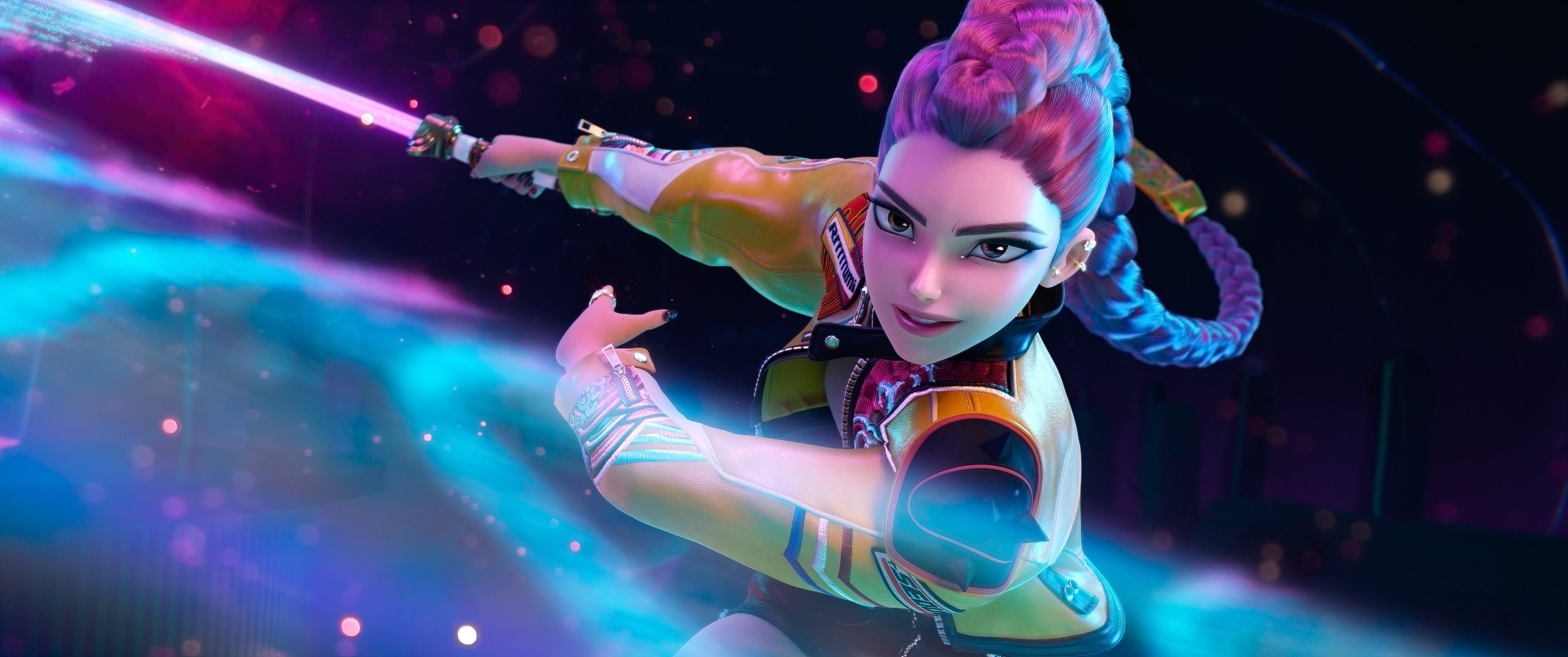
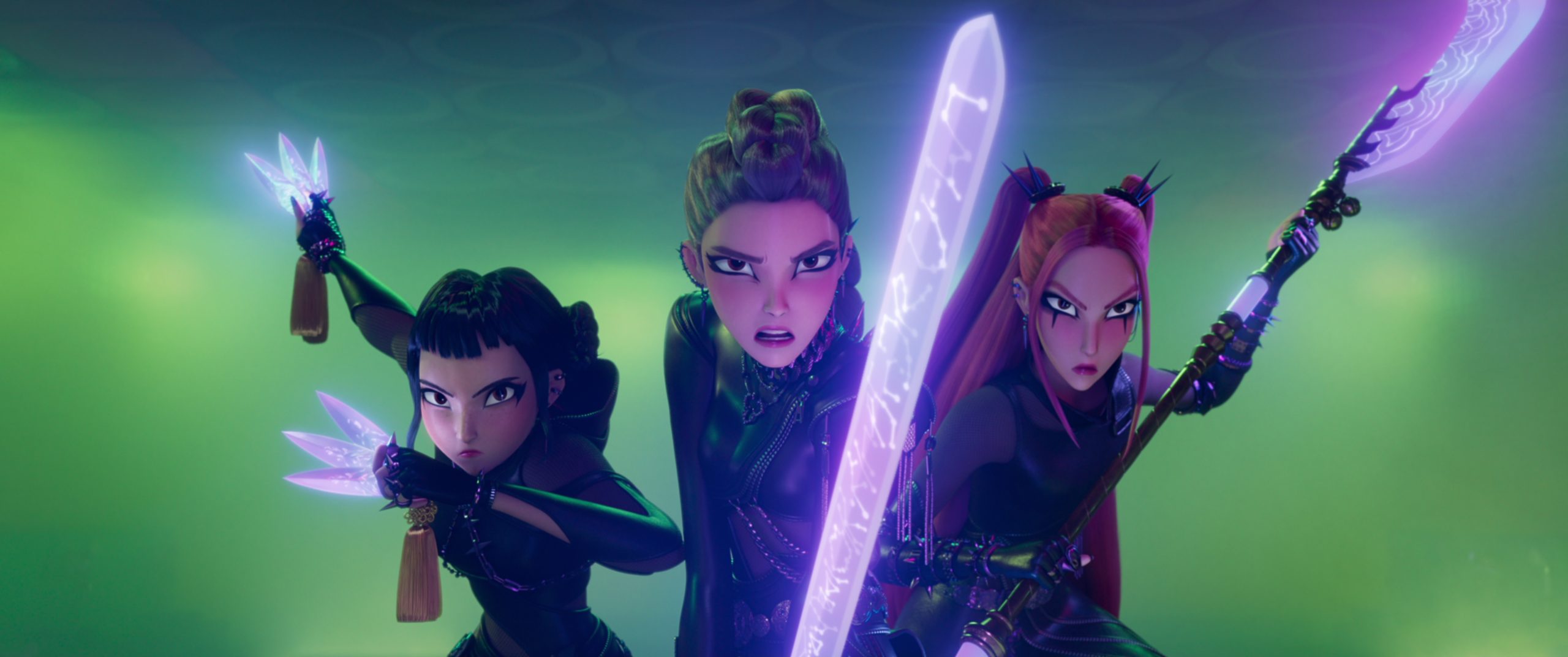
One interesting example is the Huntrix weapons' formation FX where the girls are summoning Honmoon ribbons that tie in a knot reminiscent of a traditional Norigae before morphing into the weapons. In the final scenes it all happens so fast that it's barely noticeable, but it is there.
Were there any particular sequences in KPop Demon Hunters that pushed you to try something new, either technically or artistically?
FM: Yes, definitely. The finale in the stadium sequence with the largest and angriest version of Gwima was the biggest challenge for us. He’s a giant creature made of stylized fire, and he kept growing and changing shape during the movie. We had to mix procedural 3D effects with 2D hand drawn animation to keep the look alive and expressive. There has been a lot of back and forth between departments and different sides of the FX team, but we and the client were really happy with the result.
NF: The finale was definitely the most challenging sequence tech-wise. But we were always trying to find new and creative solutions. After we had established the workflows for our main FX we were able to adapt them to create custom shot-specific FX in many other instances, like the FX transition during the flashback sequence in which we see Jinu's past. Demon patterns run from Jinu's neck to his face and eyes ultimately covering the whole camera and revealing a nightmarish vision of Gwima, similarly to Gwima's flames but with a lot more intricate layering, all that was 2D animated and subsequently enhanced and enriched in 3D.
Can you walk us through your typical FX workflow and where Toon Boom Harmony features?
FM: Usually, we start with the first version of animation or layout passes to get a rough idea of the effects we need and how they support the story. At this stage, we have internal discussions to decide the best approach and which 2D/3D hybrid techniques to use for each shot.
Once the shots are ready, we deliver a clean plate to the 2D team to start the drawing process. From there, there’s some back and forth for reviews and testing where the 2D elements are sent to the 3D team to enhance the detail and add secondary elements.
NF: Toon boom Harmony was used as our 2D animation software, all the 2D elements were hand-drawn and animated on it.
Were there any Harmony tools or techniques that proved particularly useful during production?
FM: Yes, Harmony was really useful in several ways. Its node based system gave us flexibility to create multilayered effects and address notes quickly either modifying existing layers or adding new ones.
We also appreciated how open, flexible and well documented Harmony is. The API and the direct support from the Toon Boom team allowed our FX developer, Edmond-Boulet Gilly in combination with our Harmony veterans Nicola Finizio and Brandon Louie, to build custom tools aimed to import and export data to integrate Harmony directly into our pipeline.
NF: A feature that proved really useful was the ability to export specific vector information about hand-drawn lines in the 2D FX which could then be translated, enriched and more easily manipulated by the 3D FX team. Me and Filippo had already worked with a similar workflow on Spider-Man: Across the Spider-Verse for the Spot FX, but here we were able to take that technique a lot further, working at a much higher level of detail and intricacy. We used this technique for the Huntrix weapon-formation FX, for example.
How did the 2D FX and 3D FX teams collaborate on this film - can you describe the pipeline?
FM: I’d say in terms of technical workflow the 2D and 3D FX teams worked a bit differently depending on the effect, but our general rule was always the same: 2D defined the design and rhythm while 3D took it from there and added depth and additional detail and at the very end compositing tied everything together.
A good example of different workflows are the weapon formations and Gwima’s fire.
For the weapons, 2D artists animated the flowing ribbons in Harmony, which were subsequently imported into Houdini as 3D curves and enhanced with particles, sparks, and glowing edges, but making sure to not overpower with these and preserving their hand drawn shapes.
For Gwima, rough 3D animation set the timing and performance, then 2D artists redrew the flames as masks for custom CG stylized fire simulations. Additionally when needed, modular 2D fire elements were arranged in 3D to add more detail while keeping the stylized and painterly look consistent.
NF: The look of the film is very stylized so we incorporated 2D-hand-drawn elements to drive the shape-language of the effects in a way that felt coherent with the film's art direction. Interplay between 2D and 3D FX teams was crucial. The FX production of these elements would start with a 2D animation pass, which would then get handed over to the 3D FX team for further passes that would increase the detail density and heighten the visual intensity of the shot.
Can you share an example where 2D and 3D FX integration really elevated a scene?
FM: A great example is the weapon formations. The 2D team hand animated the flowing ribbons in Harmony, giving them delicate curves and expressive movement. This would have been incredibly hard to achieve in pure 3D and with very long iteration turnaround time otherwise.
We then brought these animations into Houdini as simple 3D curves and then added particles, sparks, and glowing edges to give them depth and scale. Due to the mythological aspect of these ribbons we all felt that the 2D touch gave them something special that the ribbons feel alive and magical.
NF: Collaboration between 2D and 3D was key in the weapon formations. I worked closely with Filippo and 3D FX Lead Daniel La Chappelle on creating that effect and from the very beginning we would send files back and forth from 2D to 3D, even in the brainstorming stage so that each side would inform the other's work and spark new ideas in the process.
After some experiments we landed on the process that Filippo explained earlier and did countless iterations until the timing and design were perfected to our Art directors' preferences.
At that point we had established a solid and replicable workflow that could be adapted to various sequences (and by various artists) when we got to shot-production. And in the final movie, lots of these FX were animated by Brandon Louie (2D) and Alice Jao (3D).
What makes KPop Demon Hunters unique as a project compared to other productions you’ve worked on?
FM: For me KPop Demon Hunters is special for how seamlessly it blends stylized 2D design with cinematic 3D FX. Usually, productions lean more heavily toward one or the other, but here both worlds had equal weight and importance for us. The 2D side is driving the personality and energy, and the 3D side bringing scale, atmosphere, and realism when needed.
NF: Everything Filippo said and also the unique blend of action, comedy, fantasy and musical-sequences which gave us many opportunities to explore different stylistic approaches.
How do you see animation contributing to the global growth of KPop as a cultural phenomenon?
FM: I think animation and KPop share the same energy, bold, emotional, and full of life. With animation, we can push that energy even further, exaggerating movement, colors, and emotions in ways live action can’t since it’s bound by real world physics. It lets us create moments that capture the excitement and personality of KPop and share that feeling with a wider audience, even people who might not normally follow the music (like me before working on this project).
NF: Animation's ability to enhance the emotional range of a scene beyond realism complemented Kpop's glam and catchy tunes. In retrospect it feels like a perfect match!
You’ve worked on FX teams on some major feature films. What drew you into FX animation in the first place?
FM: I kind of stumbled into animation after years working in live action, and I ended up loving it. Being part of the creative conversation and finding new artistic or technical solutions is really fulfilling.
Animation today feels like the perfect playground for experimentation, especially now, in this “post Spider-Verse” world where everyone’s looking for new styles, fresh movies and it’s enabling filmmakers to push more.
NF: I also ended up in animation through a nonlinear path but I always loved drawing and I love (2D) FX animation because it requires you to draw and solve shape-design puzzles in the most disparate styles, from the very abstract to the classical observation-based and figurative.
What advice would you give to students or aspiring animators for making FX that feels dynamic and compelling?
FM: I’d say the biggest thing is to pay attention to timing and rhythm. Even the most beautiful FX won’t feel alive if the motion doesn’t match the action or story. Study how things move in the real world, then exaggerate or slow things down to make them read better on screen. Timing gives your FX energy and makes it feel dynamic, so always test it in context with the characters and scene.
NF: Always dedicate time to the basics. Timing, spacing, rhythm but also composition, how the FX fit in the scene and serve the context and narrative of the movie. (also being surrounded by super-talented team helps a lot)
Thanks!
For more stories from the animators and artists behind major movies and features, check out Toon Boom’s blog.
The post Global Superstardom Meets the Supernatural in KPop Demon Hunters appeared first on Toon Boom.