

Hi, folks! I admit it’s been a while, but over the last several months, my work as a film restoration artist has kept me occupied. I’ve also been tapped to consult with Turner Classic Movies (more about that in a forthcoming post). At the same time, I’m actively rehauling my Patreon, which was created to further my research into classic American animation. For this post, I’d like to share upcoming projects and exciting features currently on my page.
Coming Soon
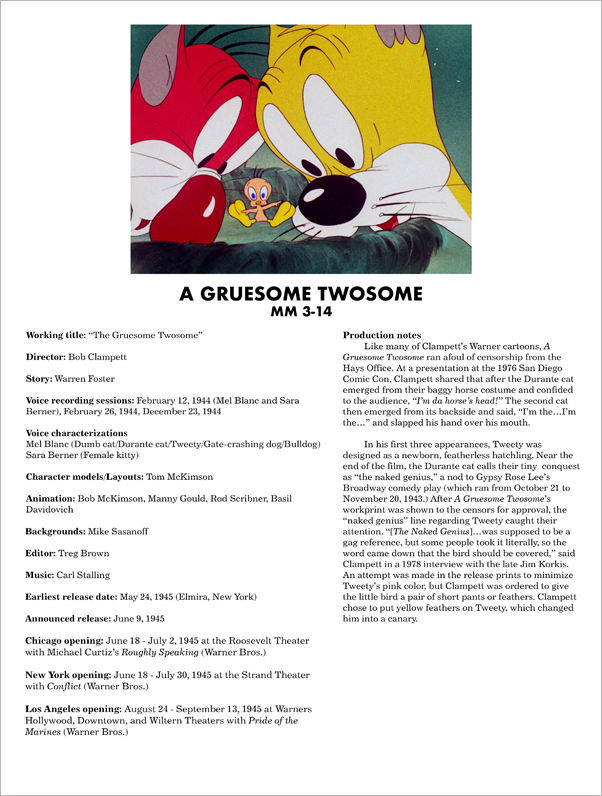
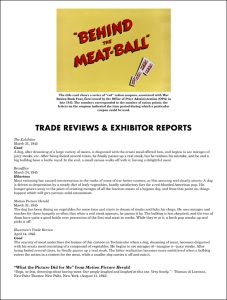
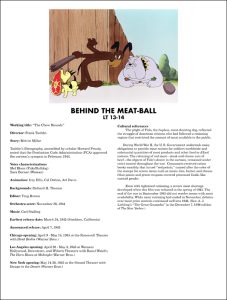
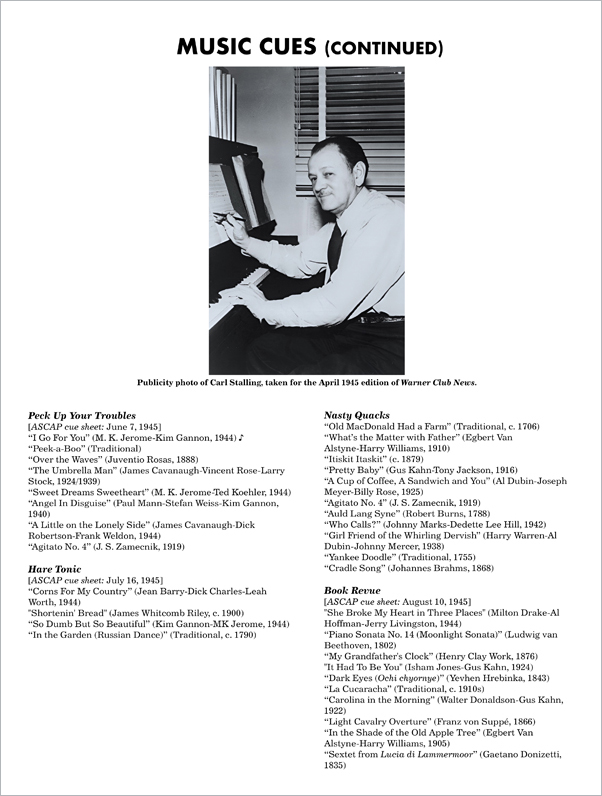
Accurate release dates for classic theatrical cartoons, before 1980, have been an ongoing mystery for cartoon researchers for years. Even studio records are – as Jerry Beck has said – a “rough guideline” to when a cartoon made its actual first public appearance. As an ongoing attempt to compile the most comprehensive production data, using every available resource, I’m planning to launch a series of informational eBooks detailing classic animated shorts released in a specific year. Chances are, these will be “first editions,” since passion projects like this are constantly updated and revised as more information becomes accessible. As of now, the eBooklets will focus mainly on Warner Bros. and MGM’s cartoons. Depending on the volume of available data, the project might expand to other cartoon studios.
Here’s a sneak peek into what’s in progress now – a lot of wonderful folks have helped this come alive (the sample pages here aren’t in final layout as of this writing):
VAN BEUREN PRESERVATION
A couple of years ago, I learned that at least three B&W cartoons from the Van Beuren Corporation survive in 35mm nitrate prints at the Library of Congress—but only in their “Official Films” versions.
After Amadee Van Beuren’s passing in 1938, various film agencies acquired and reprinted the cartoons in smaller gauges for the non-theatrical market. Throughout the 1940s, Official Films sold copies of Van Beuren cartoons and retitled their series, except for The Little King. Aesop’s Fables became “Jungle Jinks”; Tom and Jerry were renamed “Dick and Larry” (for obvious reasons); Cubby Bear was rechristened “Brownie Bear”.
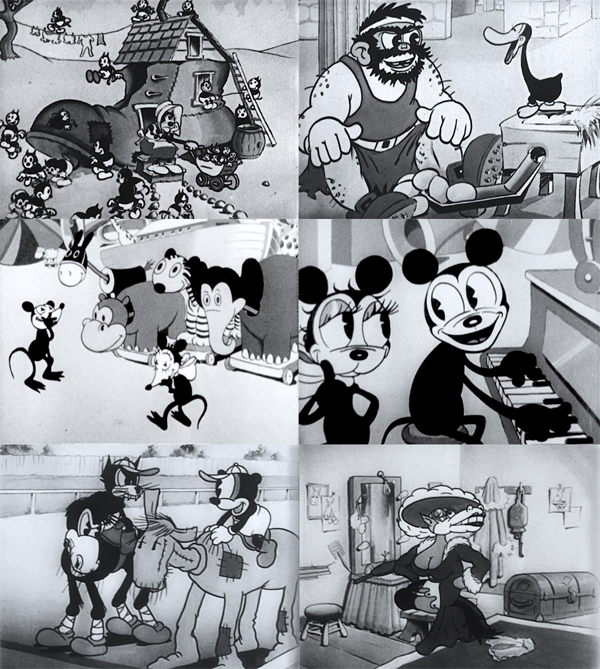
The films I’ve acquired from LoC: two Aesop’s Fables, 1931’s The Family Shoe (aka “The Golden Goose”), and 1932’s Toy Time (aka “Toyland Adventure”), along with one Cubby Bear from 1933, Galloping Fanny (aka “Galloping Hoofs”). These three titles are all that survive in 35mm from the Official Films master positive materials—the remainder is only extant in 16mm. Although they aren’t from the original releases, these might still be the best surviving material for these Van Beuren cartoons. (The screen grabs shared below are from 16mm copies, provided by Thunderbean Animation’s Steve Stanchfield.)
I should note about an outlier in the trio of cartoons: it came to my attention that Toyland Adventure is a nitrate, fine-grain print, and will look stunning. But — it’s the silent, three-minute “headline edition,” not the complete version. The LoC has complete copies in 16mm, but only in collector and rental prints, with varying quality. I’ve decided to proceed with the scan because, even if it’s truncated, it proves that Toy Time exists in 35mm in some form.
In a few months, after I’ve received the 2K scans and used all the digital tools to spruce them up, all three titles will be presented in fully remastered versions for Patrons and non-subscribers.
To make this news even more exciting, I located another piece of film from the LoC. I won’t say what exactly yet, but it’s a small, vital chapter in the filmography of a famous animation director.
Available Now
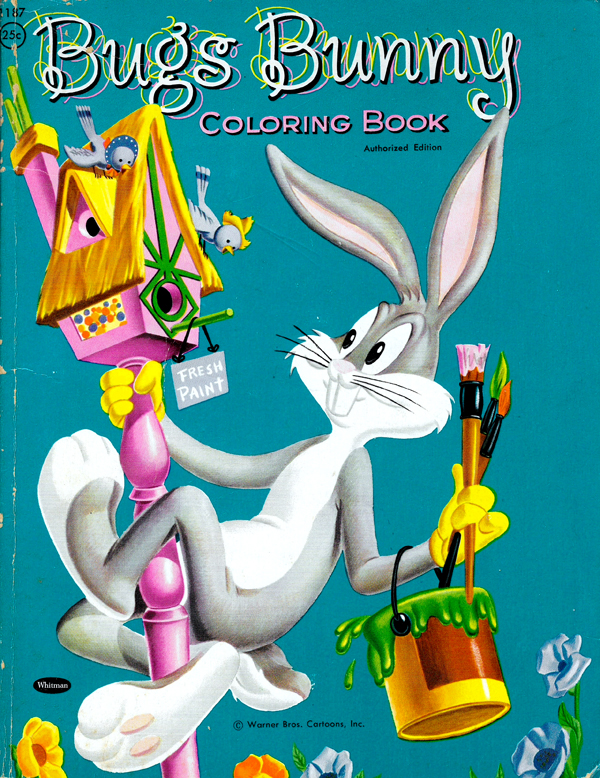
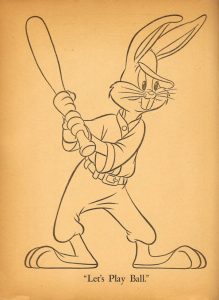
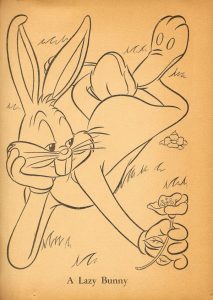
One of the newest features on the free feed is a vintage Bugs Bunny coloring book, issued in 1955 by Whitman Publishing. What makes this book special are the 128 pages of artwork by Bob McKimson, the guidepost that shaped the house style of Warner Bros. animation. With each page, every member of the Looney Tunes cast is about as “on-model” as Warners licensing could get. I’m hoping to eventually find the few other Bugs coloring books with McKimson’s illustrations.
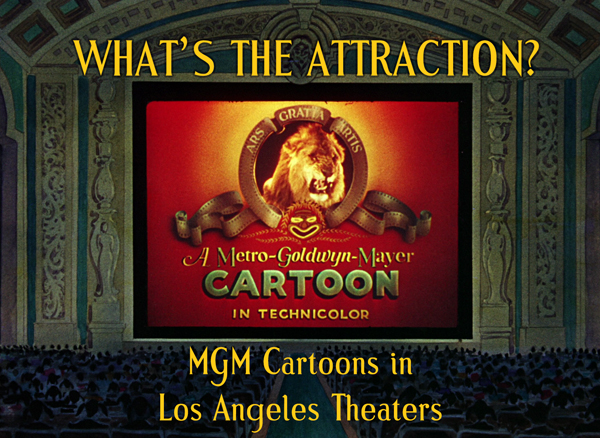
 About a year ago, I presented readers with an ongoing project, “What’s the Attraction, Doc?” The original post assembled raw data on what might be an uncharted topic in the history of classic American animation: various cartoon shorts and the feature films attached to them, as they played in first-run theaters in major cities upon original release (and reissue). I’m primarily focusing on the animated cartoons produced on the West Coast: Warner Bros., Disney, MGM, Walter Lantz, Screen Gems, et al. JB Kaufman dispensed such knowledge in his book Walt Disney’s Silly Symphonies: A Companion to the Classic Cartoon Series, co-authored by the late Russell Merritt.
 A few weeks ago, the first in the series, What’s the Attraction: MGM Cartoons in Los Angeles, 1934-1958, was published. This focuses on the cartoons distributed by Metro-Goldwyn-Mayer (MGM) released between 1934 and 1958, and their placement in Los Angeles movie theaters. Compared with the number of shorts released by Disney and Warner Brothers in the theatrical era, Metro had a relatively small output (a few industrials from John Sutherland Productions, which MGM released, are included here as well).
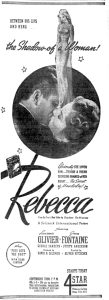
Lots of interesting new information is in here. For example – Did you know that in Los Angeles, the first Tom and Jerry cartoon played alongside Alfred Hitchcock’s first American feature? That’s right: Puss Gets the Boot was on the program with Rebecca at the Four Star Theater, where it enjoyed a record-breaking three-month engagement, from March 27th to June 19th, 1940.
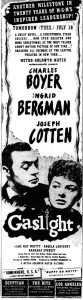
Had you any idea that Happy-Go-Nutty, Tex Avery’s second Screwy Squirrel vehicle, was on the bill with Gaslight? What a pairing! Or that The Mouse Comes to Dinner accompanied National Velvet, or that the Oscar-winning The Two Mouseketeers opened before Singin’ in the Rain?
Priced at $10 for Patrons and non-subscribers, you can learn all this and more! The post contains a large spreadsheet of the cartoons, their accompanying feature films, theaters, and playdates, compiled into a single PDF file. Just keep in mind that not every MGM cartoon releaseis included in the glossary. The research still continues.
ANIMATOR BREAKDOWNS FOR THE DUCK
“Ya wanna buy a DUCK?”
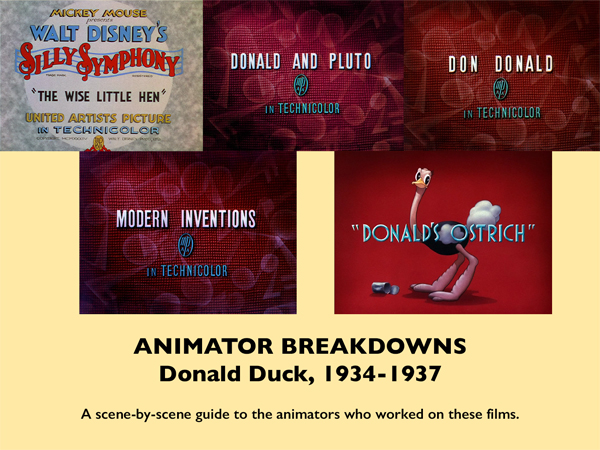
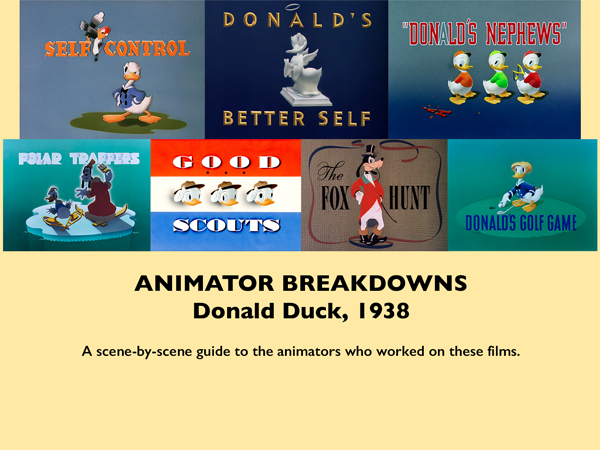
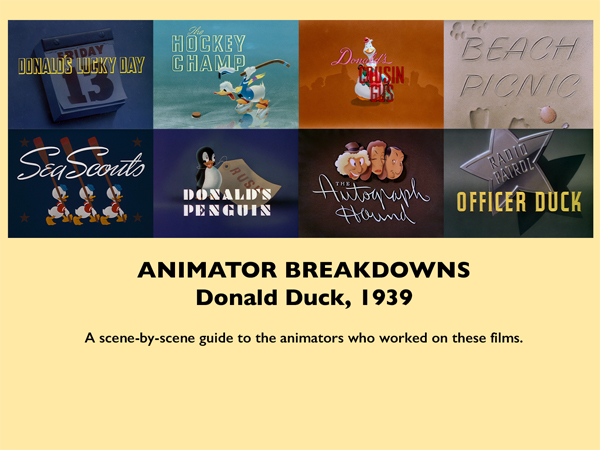
Patreon has been home to “animator breakdown” videos of all Donald’s solo shorts released from 1934—his debut in The Wise Little Hen—to 1939. The videos are showcased in three separate bundles, priced at $5 each for Patrons and non-subscribers, where viewers can observe the Disney artists responsible for Donald’s evolution into a star character, film by film, in chronological release order. Information for this series was drawn from production materials in the collections of Hans Perk and Mark Kausler, in addition to JB Kaufman and David Gerstein’s research used for their book, Walt Disney’s Donald Duck: The Ultimate History, published by Taschen.
Click these for more info:
• Donald Duck, 1934-1937
• Donald Duck, 1938
• Donald Duck, 1939
Animator Breakdown: Bambi (1942)
If you subscribe at the $3+ level, you’ll have access to an animator breakdown of the entire Disney feature, split up into sections. The first section contains informative slides that detail a (condensed) chronological timeline of Bambi’s production and release. The slides also include a list of artists who worked on the film, including the character and effects animators, who were only listed in the production draft (a photocopy provided by Mark Kausler). As a bonus, I’ve included the entirety of “Bambi’s Children,” a special comic book story originally published in Four Color no. 30, and drawn by Ken Hultgren, one of Bambi’s key animators. CLICK HERE.
Lantz Feature!
If you subscribe to the $10+ level, you will be able to see twelve animator breakdowns of Walter Lantz cartoons released between 1951 and 1955, all in one large video!
Also included are all four of Tex Avery’s directorial works for Lantz: I’m Cold (1954), Crazy-Mixed Up Pup, The Legend of Rockabye Point, and Sh-h-h-h-h (all 1955). UCLA’s Walter Lantz Animation Archive supplied the “scene/footage sheets” used to verify the animators’ credits in their assigned footage.
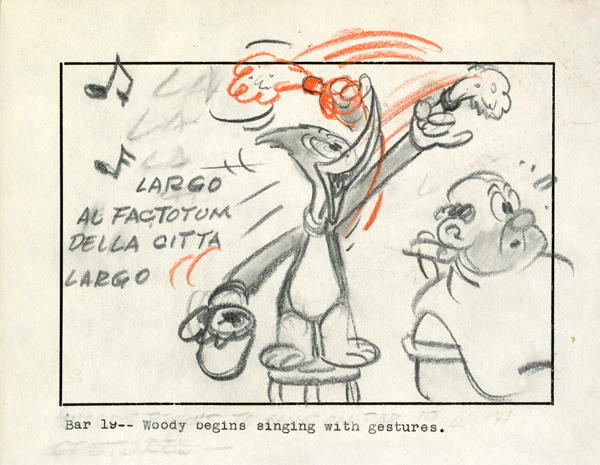
This video reveals which Woody Woodpecker cartoons are in the feature:
Story to Screen: The Barber of Seville (1944)
The $10+ level will also give viewers a special video that closely matches the original storyboard sketches (again, provided by UCLA’s Walter Lantz Animation Archive) to the final version of Shamus Culhane’s first Woody Woodpecker.
Projects to benefit Current and Future Research:
I’ve uploaded vintage animation union bulletins to the Internet Archive, like the SCG 852 (CA) publication The Animator and the SCG 1461 (NY) newsletter Top Cel. Currently scattered across different archives, institutions, and personal collections, my mission is to gather the surviving documents into a “one-stop shop.”
Not only does this literature provide a rare insight into the animation industry in both the East and West Coast, they often contains the only clue, on record, in disclosing an artist’s career path; readers can also find names of artists in the lower rungs of the business who never received credit for their work (ink-and-painters, assistants, in-betweeners, et al).
Regarding Top Cel, I’d like to thank Richard O’Connor, Bob Coar, J. J. Sedelmaier, Charlie Rose of Peeler/Rose, Jerry Beck and the late Howard Beckerman for providing many of the Top Cel issues you’ll see here. More will be uploaded to IA soon (the Top Cel collection extends to the 1980s…).
Lastly, the Patronage I’ve received allowed me to acquire several issues of Warner Club News, and at least one issue of MGM Studio Club News from November 1938, many of which aren’t in any major archive/institution. I’ve offered to scan digital copies of these rare publications as an addition to the Media History Digital Library (MHDL), a marvelous resource for entertainment history. Before anyone comments, the MGM internal newsletter, unfortunately, reported nothing from the cartoon department.
That’s all I have to share for now. Your support would benefit not only the Patreon page but also American animation history, so please consider subscribing as a Patron or purchasing from the Shop.